Friday, June 30, 2006
Law Influencing Art
Ken Johnson's review of the Brooklyn Museum's new "Graffiti" show in today's New York Times notes that among the "developments in the late 70's [that] conspired to bring graffiti into art galleries" was "the crackdown on graffiti in the subways by city officials."

Another $140 million? (UPDATED)
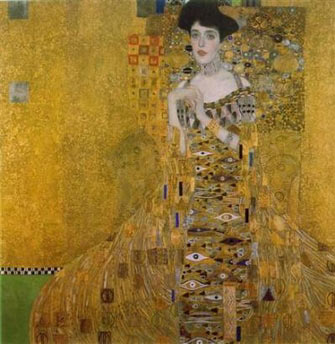
Bloomberg reports that, fresh off their $135 million Klimt sale, the Bloch-Bauer heirs may be selling the four other Klimts they recently recovered from the Austrian government -- for a total of $140 million or more:
"The heirs will probably consign their other Klimts to the candidates who put the highest value on the pictures, and perhaps guarantee a minimum price to the family and forgo some commissions, experts said. At an auction, the rewards for selling $140 million of art would be huge, even if the family paid no fees. Buyers at Christie's and Sotheby's pay a commission of 20 percent on the first $200,000 and 12 percent on the rest."
I previously discussed auction house minimum guarantees here.
UPDATE: I just noticed this related story from last week at The Art Newspaper ("Fierce competition to secure consignments leads to 'suicide deals'"), noting that "auction houses are independently agreeing not only to drop the vendor’s premium to nil, but to kick back part—sometimes most—of the buyer’s premium to consignors as well. Amounts of up to 80% are rumoured. The practice is sometimes known by the shorthand 'IC', which stands for 'introductory commission'."
"The heirs will probably consign their other Klimts to the candidates who put the highest value on the pictures, and perhaps guarantee a minimum price to the family and forgo some commissions, experts said. At an auction, the rewards for selling $140 million of art would be huge, even if the family paid no fees. Buyers at Christie's and Sotheby's pay a commission of 20 percent on the first $200,000 and 12 percent on the rest."
I previously discussed auction house minimum guarantees here.
UPDATE: I just noticed this related story from last week at The Art Newspaper ("Fierce competition to secure consignments leads to 'suicide deals'"), noting that "auction houses are independently agreeing not only to drop the vendor’s premium to nil, but to kick back part—sometimes most—of the buyer’s premium to consignors as well. Amounts of up to 80% are rumoured. The practice is sometimes known by the shorthand 'IC', which stands for 'introductory commission'."
Thursday, June 29, 2006
"You shouldn't try to use copyright to try to take editorial control of someone's work"
So says one of Carol Shloss's attorneys in this piece in the Irish Examiner on her copyright misuse lawsuit against the James Joyce estate, discussed earlier here.
Chihuly in the Bronx
Bloomberg has a piece up about the blockbuster Dale Chihuly installation that opened last weekend at the New York Botanical Garden in the Bronx, but also includes a discussion of the lawsuit that I've mentioned here several times (most recently, here). The trial is apparently scheduled for next April. The article states that "Chihuly's lawyers need to prove exact visual imitation" -- but that isn't quite right; the test for copyright infringement is "substantial similarity," not "exact imitation." There is also no discussion at all of the former assistant's co-authorship claim (which was discussed here [scroll down a little] and here [point 2]). The article closes with the following: "At this point, Chihuly wishes the suit would just go away. He's upset someone copied him, but 'it's a drag, it's hard to sue someone.'" Bingo.
Wednesday, June 28, 2006
NASCAR Victory Lap
The Third Circuit has has affirmed the district court's grant of summary judgment for NASCAR in a lawsuit brought by the artist who designed the Nextel Cup trophy. The Philadelphia Business Journal had a good story on the background that led to the suit back in November 2004.
Bill Patry calls attention to the Third Circuit's (very brief) discussion of the Visual Artists Rights Act, ending in a holding that what the artist created here were "technical drawings, diagrams, or models," which are expressly excluded from VARA protection.
Also of interest is the Court's adoption of NASCAR's "implied license" theory -- that because the artist "created the trophy images with the intent that they would be used and displayed by NASCAR," an implied license existed as a matter of law.
You can see a picture of the trophy here.
The decision is National Association for Stock Car Racing, Inc. v. Scharle, 2006 WL 1697101 (3d Cir. June 21, 2006) (not for publication).
Bill Patry calls attention to the Third Circuit's (very brief) discussion of the Visual Artists Rights Act, ending in a holding that what the artist created here were "technical drawings, diagrams, or models," which are expressly excluded from VARA protection.
Also of interest is the Court's adoption of NASCAR's "implied license" theory -- that because the artist "created the trophy images with the intent that they would be used and displayed by NASCAR," an implied license existed as a matter of law.
You can see a picture of the trophy here.

The decision is National Association for Stock Car Racing, Inc. v. Scharle, 2006 WL 1697101 (3d Cir. June 21, 2006) (not for publication).
Tuesday, June 27, 2006
Is the Berry-Hill townhouse sale off?
Lee Rosenbaum discusses the question here, interviewing James Berry Hill directly (and getting a libel warning for her trouble). Earlier post on the sale here.
Dutch Painting Attacked
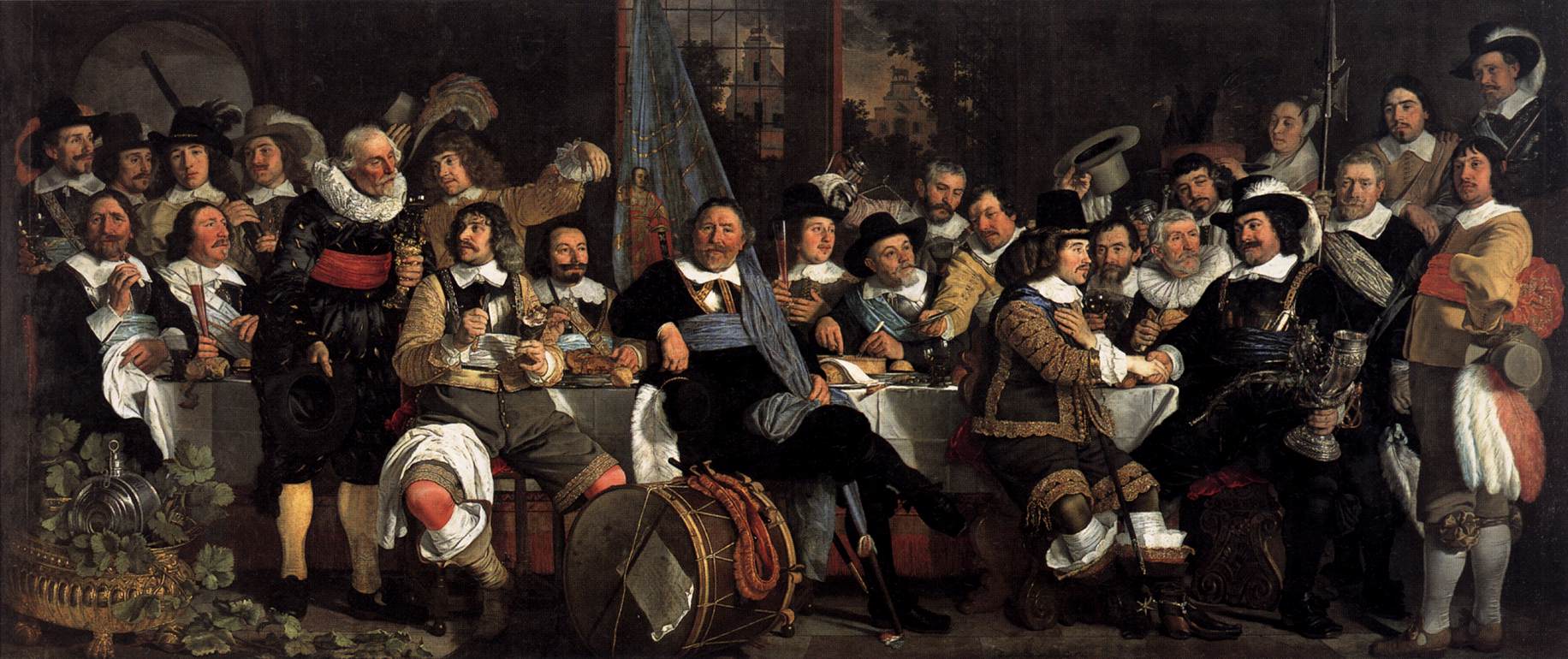
A 69-year-old man has been arrested after hurling a "caustic substance" at a 17th-century painting at The Rijksmuseum in Amsterdam on Sunday. The New York Times report is here. You can see the painting, "Celebration of the Peace of Münster" (1648) by Bartholomeus van der Helst, here. Apparently the attacker is "a known vandal whose picture had been circulated among guards, but he was not recognized when he entered." It's also not the first incident of vandalism at the museum: "Another van der Helst painting at the Rijksmuseum was attacked with a knife in 1989, and in 1990 the museum's best-known painting, Rembrandt's 'Nightwatch' (1642), was sprayed with hydrochloric acid."

Monday, June 26, 2006
Sam Waksal Sales Tax Evasion
The New York Law Journal has a report ($) this morning on the New York State Division of Tax Appeals' affirmance of a fraud penalty against ImClone founder (and Martha Stewart pal) Sam Waksal for failing to pay sales taxes on over $15 million worth of art. Waksal is currently serving a seven-year federal prison sentence for insider trading. As part of his insider trading guilty plea, he admitted that he bought works from a gallery in Manhattan but had the invoices sent to an address in New Jersey to evade New York taxes. New York State followed up by assessing sales and use taxes, plus fraud penalties (and interest), amounting to more than $1.8 million. The court rejected Waksal's claim that he only did what "many, many" others have done and was therefore being singled out for unduly harsh treatment: "[T]here is absolutely no basis to conclude that the Tax Law has been selectively enforced against petitioner."
Sunday, June 25, 2006
More on the Joyce Estate
John Naughton had this piece in the UK Observer this weekend on the lawsuit that was recently filed against the James Joyce estate, which I wrote about here. He says that, "given that the entire publishing world has been legally intimidated by Stephen Joyce for decades, this is a landmark action. And the case will be followed with interest in every jurisdiction in which works on James Joyce are published." And ends with this prediction: "Lessig decided to take on [the] case pro bono and will be backed by the formidable resources of Stanford Law School. So the stage is set for one of the most interesting legal confrontations of our times. Stephen [Joyce] has had things his own way for many years, partly because of his implacable determination to protect his grandfather's legacy, but also because publishers have invariably backed down when confronted with the prospect of the litigation he has been willing to unleash. I have a hunch he may have finally met his match." I wouldn't back up that hunch with a lot of money; "copyright misuse," the theory under which the case has been brought, is not an easy thing to establish. But Naughton is certainly right that this is a case that will be very closely watched, here and elsewhere.
Berry-Hill Bankruptcy
The Financial Times had this update this weekend on the Berry-Hill gallery bankruptcy proceeding.
Ruscha Mural Update
In my catch-up post after having been away for a few days last week, I somehow neglected to mention this Los Angeles Times update on the painted over Ed Ruscha mural, all the more inexcusable since I'm quoted in it.
Thursday, June 22, 2006
Estate Tax Compromise?
A couple of weeks ago I mentioned a New York Times story that said "negotiators appeared unable to reach [an estate tax] deal before the end of this week — if ever." Greg Mankiw reports that "ever" may be here soon. The latest proposal would (a) increase the exemption amount to $5 million per person starting in 2010, (b) reduce the rate on estates up to $25 million to the capital gains tax rate (currently 15 percent), and (c) reduce the rate on estates of $25 million or more to twice the capital gains rate. Mankiw says "this legislation could get the necessary 60 votes in the Senate and put an end to the tremendous uncertainty now surrounding the future of the estate tax."
Vase-Smasher Speaks
Nick Flynn, in his own words: "I had no idea my accident was going to turn into an international news story." (Related posts here, here, and here.)
Is art a good investment?
Daniel Gross says yes at slate.com. Tyler Cowen is (convincingly) skeptical:
"Studies of auction prices are usually biased toward the winners; the losers never go on the block again or are sold quietly at a loss through dealers. Many pieces turn out to be fakes. The placement costs in the dealer market can be higher than those at Sotheby's. Storage and insurance costs for masterpieces are considerable. Art is so much fun it can't earn the same rate of return as equity, otherwise no one would buy stocks."
At the end of his piece, Gross mentions the Artist Pension Trust, a kind of 401(k) plan for artists, whereby they pool their work and then share in the proceeds of sales from the pool. Cowen was skeptical of this too.
"Studies of auction prices are usually biased toward the winners; the losers never go on the block again or are sold quietly at a loss through dealers. Many pieces turn out to be fakes. The placement costs in the dealer market can be higher than those at Sotheby's. Storage and insurance costs for masterpieces are considerable. Art is so much fun it can't earn the same rate of return as equity, otherwise no one would buy stocks."
At the end of his piece, Gross mentions the Artist Pension Trust, a kind of 401(k) plan for artists, whereby they pool their work and then share in the proceeds of sales from the pool. Cowen was skeptical of this too.
Tuesday, June 20, 2006
The $135 million painting
Carol Vogel had this report in The New York Times yesterday on Ronald Lauder's purchase, for the Neue Galerie, of a 1907 Klimt portrait for a record $135 million. The painting was for many years the subject of a restitution battle with the Austrian government. In January, it was returned, along with four other Nazi-looted Klimt paintings, to descendants of the original owner, who will now share the sales proceeds. A couple years back, Tyler Cowen had this post on what else you can buy for $100 million.
Catching Up
A few quick hits on stories that have been mentioned here before:
- Nick Flynn, the guy who tripped over his shoelaces and into three 17th Century Qing dynasty vases in January (previously mentioned here and here), has been cleared of any criminal charges. "I can say with my hand on my heart that it was not deliberate," he says.
- The Brooklyn College MFA students have brought their threatened First Amendment lawsuit against the city and the school.
- An eavesdropping lawsuit brought by "painter of light" Thomas Kinkade in Michigan state court (against the lawyers for a former Kinkade art gallery that recently obtained an $860,000 arbitration award against him) has been dismissed.
Thursday, June 15, 2006
Monday, June 12, 2006
The Power of the Estate (UPDATED)
This week's New Yorker has a fascinating article by D.T. Max about James Joyce's grandson, Stephen Joyce, who rules the Joyce estate with an iron fist. Max reports that, among other things, Stephen has "attempted to block the publication of dozens of scholarly works" and "rejects nearly every request to quote from unpublished letters." Given how soft a concept "fair use" is, "Joyceans are often unsure if they are violating the law, and when the estate objects they usually give in." One scholar who had a run in with the estate over her biography of James Joyce's mentally troubled daughter is now planning a lawsuit, with the pro bono help of Stanford law professor/IP rock star Lawrence Lessig. Lessig believes it will be the first time a literary estate has been sued on a theory of "copyright misuse." Judge Posner, guest-blogging at Lessig's blog, discussed the misuse theory here.
UPDATE: The lawsuit is on.
ANOTHER UPDATE: Lessig blogs about the suit here, including a link to the complaint.
UPDATE: The lawsuit is on.
ANOTHER UPDATE: Lessig blogs about the suit here, including a link to the complaint.
Sunday, June 11, 2006
The Missing Piece
The cover story of The New York Times Sunday real estate section today is about a man who's looking to trade a Maurice Sendak watercolor for a Manhattan apartment, but it leaves out a very important part of the equation: income taxes.
Near the end, the article does note that the seller of the apartment would have to include the value of the bartered work as part of the purchase price received. But it's equally important to mention that the buyer of the apartment also has to pay income tax on the value of the bartered work -- it would be as if he sold the Sendak for cash and then used the cash to buy the apartment. So if the Sendak is really worth $650,000, as the owner suggests in this article, he'd have $650,000 of income to pay taxes on (but no cash from the sale with which to pay it). This is exactly what got artist Peter Max into trouble a decade ago: bartering paintings for real estate and failing to declare the "sale" of the paintings on his income tax returns.
Near the end, the article does note that the seller of the apartment would have to include the value of the bartered work as part of the purchase price received. But it's equally important to mention that the buyer of the apartment also has to pay income tax on the value of the bartered work -- it would be as if he sold the Sendak for cash and then used the cash to buy the apartment. So if the Sendak is really worth $650,000, as the owner suggests in this article, he'd have $650,000 of income to pay taxes on (but no cash from the sale with which to pay it). This is exactly what got artist Peter Max into trouble a decade ago: bartering paintings for real estate and failing to declare the "sale" of the paintings on his income tax returns.
Saturday, June 10, 2006
Ruscha Mural Update
This (opinion) piece in the LA Times says Kent Twitchell has already filed suit over the painting over of his Ed Ruscha mural in downtown LA, which I posted about last week here.
Subscribe to:
Comments (Atom)