Lee Rosenbaum (who has new digs) and Tyler Green gang up on Met curator Gary Tinterow for what they regard as a too casual attitude towards museum deaccessioning. A while back economist Tyler Cowen asked why deaccessioning draws such intense criticism, and suggested a "a very crude theory, too crude to possibly be true":
"Stop thinking of visitors as the museum's customers. Instead the customers are the donors. Donating a picture is like spending money. The donor gives a Picasso to MOMA, in return purchasing the feeling of 'having given a Picasso to MOMA.' This yields tax, networking, and other privileges in this life, as well as a long-term legacy. Museums, in turn, take some care to attract viewers, so that their real customers -- the donors -- have greater feelings of satisfaction about the whole enterprise. In this 'model,' selling off artworks makes customers (donors) nervous. 'How do I know they won't sell off my [sic] Picasso once I've died?' ... So museums sit on their huge and growing stashes of art. In this manner they signal their trustworthiness to future donors. ...The museum community, of course, does not like to admit that its donors are the primary customers (how would viewers and government funders feel?), so it must present other reasons why deaccessioning is bad."
My friend Adrian Ellis of AEA Consulting has made the following interesting argument against the absolutists:
"One approach that respects the intentions underpinning the current position on de-accessioning whilst allowing for a more balanced allocation of resources might be for the museum community to see itself more as just that – a community – and allow for a more comfortable distribution of resources between cash poor asset rich institutions and asset poor cash rich ones, allowing them to trade to mutual advantage .... Sales could be restricted to museums that conform to appropriate standards of conservation and scholarly or public access and any sale could be caveated to prevent on-sale to third parties that did not meet similar conditions."
Certainly in the case of what David Nishimura has called "survival deaccessioning" -- as, perhaps, in the Fisk University case I recently discussed (put aside for the moment the more difficult questions of donor intent that case raises) -- it's difficult to argue against a sale, particularly if, following Ellis's suggestion, it's restricted to another qualifying museum.
Tuesday, July 25, 2006
Monday, July 24, 2006
Martha Graham II?
The New York Times has a story this morning about a dispute within the famed Pilobolus dance company, including over ownership of some of the choreography, which is reminiscent of the Martha Graham case, in which Graham's heir, Ron Protas, battled her company (largely unsuccessfully) for years over the rights to her dances. The Second Circuit issued the most recent (and in all likelihood final) decision in the Graham dispute just a couple of weeks ago.

Public Art Tragedy
The Guardian has the story of a horrible accident involving a public artwork in northern England on Sunday. Two people died and 13 were injured. BBC News has more on the artist, Maurice Agis, and his inflatable "Dreamscape" sculpture.
No Contract, No Luck (UPDATED)
The New York Law Journal reports ($) on a Manhattan Supreme Court decision that, in the absence of a contract to the contrary, photographer Elizabeth Heyert does not have to pay the owner of a Harlem funeral home in connection with a series of photographs she took of elaborately dressed corpses at the home. A lawyer for the funeral home owner had written to Heyert in 2004 "demanding that if she were going to exploit the photographs for commercial gain, she should enter into a fair and equitable agreement with [the funeral home owner] and the families [of the photograph subjects]." But no such contract was ever signed, so the decision seems clearly correct as a matter of straightforward contract law ("In the absence of a contract between the parties containing specific terms of payment or entitlement, this Court will not create the contract the parties might have made. . . . Absent some agreement, a photographer owns all rights to her own photographs").
The decision also points out that the families of the deceased "all signed releases" which "by their terms, gave Heyert the right to copyright, use, reuse and publish the photographs 'for any purpose whatsoever," which the Court appeared to consider independent grounds for dismissing the claims by the families (as distinct from the owner of the funeral home). The news article quotes the lawyer for the funeral home as saying three of the families had not signed releases and he's "been contacted by those families, so the matter is not over." I'm not sure the releases really make a difference. As we saw most recently in a case involving Philip Lorca diCorcia (discussed here), in general a fine art photographer like Heyert doesn't need permission from the subjects of her photographs -- even when they are alive. The case is even stronger when the subjects are dead: the New York privacy statute applies only to "any living person." (None of which is to say releases aren't still a good idea, just to be on the safe side.)
You can see images from the series, called The Travelers, here. Grace Glueck's New York Times review from last year is here. A book is available here.
UPDATE: The New York Daily News has a short piece on the dispute here.
The decision also points out that the families of the deceased "all signed releases" which "by their terms, gave Heyert the right to copyright, use, reuse and publish the photographs 'for any purpose whatsoever," which the Court appeared to consider independent grounds for dismissing the claims by the families (as distinct from the owner of the funeral home). The news article quotes the lawyer for the funeral home as saying three of the families had not signed releases and he's "been contacted by those families, so the matter is not over." I'm not sure the releases really make a difference. As we saw most recently in a case involving Philip Lorca diCorcia (discussed here), in general a fine art photographer like Heyert doesn't need permission from the subjects of her photographs -- even when they are alive. The case is even stronger when the subjects are dead: the New York privacy statute applies only to "any living person." (None of which is to say releases aren't still a good idea, just to be on the safe side.)
You can see images from the series, called The Travelers, here. Grace Glueck's New York Times review from last year is here. A book is available here.
UPDATE: The New York Daily News has a short piece on the dispute here.
Thursday, July 20, 2006
The Scam Doctor
The Maine Antique Digest has a (very) lengthy piece on Vilas Vishwan Likhite, the 67-year-old former Harvard Medical School professor who was recently convicted and sentenced to a year in jail for attempting to sell fake Cassatt drawings. Towards the end, the article raises the interesting question of what should happen to all the other (presumably) fake art in his possession, correctly noting that, in general, "no court, after an art fraud trial, decrees that fake art must be destroyed or even labeled as bogus. A con artist is free to try it on new people." But it sounds like the prosecutor here may try to take a more aggressive tack with at least some of the works: "prosecutor Catherine Chon said, 'You can't seize property from a defendant because you feel he's going to commit crimes with it. But I think this is a little different, in that we know what his intent was, at least in terms of the artworks that he brought to the hotel.' We asked if Likhite's attempts to sell the art essentially converted it into contraband, which, like illegal drugs, can be confiscated and destroyed. 'Basically,' she said."
Twitchell Proceedings Underway (UPDATED)
As a first step towards a lawsuit, artist Kent Twitchell filed a claim today against the U.S. Department of Labor in connection with his painted over "Ed Ruscha" mural in downtown Los Angeles (see earlier posts here, here, and here). According to the Los Angeles Times, he's seeking damages of $5.5 million. The Times also reports that in the past few days two other Los Angeles murals were partly painted over, "an apparent error by a Caltrans work crew cleaning up graffiti." A Caltrans spokeswoman says the paint will be removed next week and that, because they were covered by a protective coating, "the removal process will not affect the artwork."
UPDATE: This week's LA Downtown News has more here and here.
UPDATE: This week's LA Downtown News has more here and here.
Is art a good investment (redux)?
In a post last month, I noted that journalist Daniel Gross argued yes, but economist Tyler Cowen doubted it. A new Merrill Lynch study supports Cowen's view: it concludes that art is one of the worst ways to invest one's money. Bloomberg.com has the story here.
Paperclips and Income Taxes
Last month I posted about a New York Times story of a guy looking to trade a Maurice Sendak watercolor for an apartment in Manhattan, and I noted that he (and the author of the Times's story) seemed to be overlooking the income taxes he would have to pay on the trade. I had the same thought when reading about Kyle MacDonald, the young blogger who has traded his way up from "one red paperclip" to a house (with intermediate trades along the way for, among other things, a pen, a ceramic knob, a camping stove, a generator, a beer keg, a Budweiser sign, a snowmobile, an afternoon with Alice Cooper, and a role in Corbin Bernsen's new movie). The Tax Law Prof agrees there's a potential tax problem (or would be, if MacDonald were American): "If MacDonald were subject to U.S. tax (he is a Canadian), wouldn't each exchange generate short-term capital gain, since the swaps do not appear to qualify for § 1031 like-kind exchange treatment? Wouldn't this be simple barter income? Would MacDonald be subject to the barter exchange reporting rules?" Here is a story at cnn.com. MacDonald's blog is here.
"Berry-Hill bankruptcy drags in other dealers"
Martha Lufkin has this update today in The Art Newspaper on the Berry-Hill Galleries bankruptcy proceeding. "Dealers whose pictures were consigned to and sold by Berry-Hill Galleries before it filed for bankruptcy risk losing the proceeds from their sale, unless Berry-Hill can raise enough money to make a first payment to its secured creditor by August 2. "
Wednesday, July 19, 2006
Degas Con
The New York Times reports today on a "talented con artist" who swindled a retired businessman out of a Degas bronze, reportedly worth $600,000. The swindler, Tom Doyle, has been indicted in Manhattan on charges of grand larceny. The article refers near the end to a civil suit the victim has brought against three Manhattan galleries (through which I assume the sculpture passed) demanding the return of the piece or repayment of its value. But unless there is more to the story than so far appears, that sounds like a longshot to me. It's true that, as the old saying goes, "you can't get good title from a thief"; but this sounds more like a case of so-called "voidable" title, which arises when the original transferor voluntarily relinquishes possession of the goods and intends to pass title. In those circumstances the transferee (even if a con artist) does have the power to transfer good title to a good-faith purchaser. The Times reports that in this case the victim "entrusted" the sculpture to Mr. Doyle, who "said he would buy the sculpture" and even wired a $100,000 down payment to the victim’s lawyer, all of which does sound again like voluntary relinquishment and intent to pass title.
As an amusing art law side note, as part of his con Doyle "carried a business card that identified him ... as a member of the Duveen family, a descendant of Joseph Duveen, later Lord Duveen of Millbank," who "dominated the world art market during the 1920’s and 30’s." I recently mentioned Lord Duveen in discussing the famous "unsolicited public comment" case, Hahn v. Duveen. He also makes an appearance in the Peter Schjeldahl piece I mentioned earlier today; he notes that Duveen, "the Machiavelli of dealers, ... in order to boost his trade in Old Masters, was said to have bullied a seller into accepting more payment from him than had been asked."
As an amusing art law side note, as part of his con Doyle "carried a business card that identified him ... as a member of the Duveen family, a descendant of Joseph Duveen, later Lord Duveen of Millbank," who "dominated the world art market during the 1920’s and 30’s." I recently mentioned Lord Duveen in discussing the famous "unsolicited public comment" case, Hahn v. Duveen. He also makes an appearance in the Peter Schjeldahl piece I mentioned earlier today; he notes that Duveen, "the Machiavelli of dealers, ... in order to boost his trade in Old Masters, was said to have bullied a seller into accepting more payment from him than had been asked."
Tate Report (UPDATED)
The U.K. Charity Commission has ruled that the Tate broke the law by buying art produced by serving artist-trustees, including a £600,000 work by Chris Ofili. According to a report in the Guardian today, "by law, trustees cannot receive monetary benefit from their charity without express permission, usually from the commission. The Tate failed to seek permission, not only in the case of the Ofili work, ... but in 17 previous purchases of work by artist-trustees going back 50 years."
UPDATE: Alan Riding has more on this story in today's New York Times.
UPDATE: Alan Riding has more on this story in today's New York Times.
"Is she worth the money?"
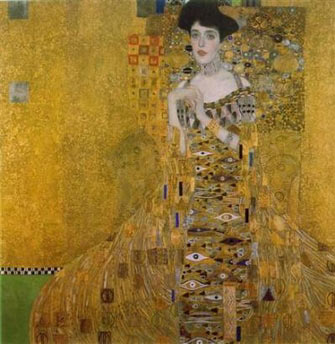
As I mentioned in a post last week, Michael Kimmelman of the Times clearly thinks so, saying the $135 million Ronald Lauder recently paid for Klimt's 1907 portrait of Adele Bloch-Bauer "may even come to look like a bargain." In this week's New Yorker, Peter Schjeldahl considers the same question. His answer:
"Not yet. Paintings this special may not come along for sale often, and the hundred and four million dollars spent for a so-so Picasso, 'Boy with a Pipe,' two years ago indicated that irrational exuberance could be the booming art market’s new motto. But Lauder’s outlay predicts a level of cost that must either soon become common or be relegated in history as a bid too far. And the identity of the artist gives pause. The price paid is four and a half times the previous high (already a stunner, in 2003) for a Klimt; until a few years ago, the artist ranked as a second-tier modern master both at auction and in the estimation of most art critics and historians. . . . Klimt and his world remain marginal to the battered but still persuasive avant-gardist chronicle of Western modern art: roughly, Paris to New York, and Cubism to abstractionism, with special status for futurism, Dada, Russian Suprematism and Constructivism, Dutch de Stijl, and Surrealism. The purchase of 'Adele' tests the possibility—ever less to be sneezed at, these days—of rewriting art history with a checkbook."
"Not yet. Paintings this special may not come along for sale often, and the hundred and four million dollars spent for a so-so Picasso, 'Boy with a Pipe,' two years ago indicated that irrational exuberance could be the booming art market’s new motto. But Lauder’s outlay predicts a level of cost that must either soon become common or be relegated in history as a bid too far. And the identity of the artist gives pause. The price paid is four and a half times the previous high (already a stunner, in 2003) for a Klimt; until a few years ago, the artist ranked as a second-tier modern master both at auction and in the estimation of most art critics and historians. . . . Klimt and his world remain marginal to the battered but still persuasive avant-gardist chronicle of Western modern art: roughly, Paris to New York, and Cubism to abstractionism, with special status for futurism, Dada, Russian Suprematism and Constructivism, Dutch de Stijl, and Surrealism. The purchase of 'Adele' tests the possibility—ever less to be sneezed at, these days—of rewriting art history with a checkbook."
Monday, July 17, 2006
The Fisk University O'Keeffes
The Tennessean had a weekend story on Fisk University's plan to sell an iconic Georgia O'Keeffe painting in order to raise money for its sinking endowment. The O'Keeffe Foundation is challenging the sale, saying it was a condition of the gift of the so-called "Stieglitz Collection" that the collection not be broken up. The issue is still before the Davidson County Chancery Court. You can listen to an NPR story on the matter from last December here. Tyler Green, a "a near-absolutist on the evils of deaccessioning at art museums," wrestles with this particular case here. An image of the painting can be seen here. My previous post on the Barnes Foundation's move to Philadelphia, which raised conceptually similar issues of when a donor's intent may be overridden, is here.

Gerald Peters Tax Suit Dismissed (UPDATE)
When I first posted about art dealer Gerald Peters's lawsuit against the IRS -- over tax deductions he took for works that turned out to be fakes -- I said my first reaction was "why hasn't the case been dismissed?" Well, now it has -- although the Associated Press story reporting the dismissal seems to suggest that it might have been pursuant to a settlement by the parties: "U.S. District Judge James Parker dismissed the case this week. No details of a settlement or other agreement were made public. In court filings over the past year, both parties indicated they had hoped to settle." I haven't been able to track down the decision, but will post an update if and when I do.
UPDATE: I still can't find a linkable copy of the decision, but it's a one paragrapher confirming that it was on a stipulation by the parties rather than on the merits.
UPDATE: I still can't find a linkable copy of the decision, but it's a one paragrapher confirming that it was on a stipulation by the parties rather than on the merits.
Title Insurance for Art
The Los Angeles Times reports on the introduction, by New York-based ARIS Title Insurance Corp., of title protection insurance for works of art, similar to real estate title insurance. The premium on a million dollar painting with undocumented Nazi-era provenance would be about 5%, or $50,000; a piece with a more secure title might be cheaper. So far they haven't sold a single policy, though one application, from a private collector, is under review.
In their "The Economics of Legal Disputes Over the Ownership of Works of Art and Other Collectibles," Richard Posner and William Landes noted the "the absence of title insurance for works of art to emerge" and said it may be due to "adverse selection and to the difficulty of calculating the risk of defective title to art with actuarial precision":
"The first point is especially important. Insurance companies normally insure against the risk of something happening in the future rather than against the consequences of something that has already happened. The insured is more likely to know the past than the future and so more likely, in the case of insurance against the consequences of something that has already happened (such as a thief in the chain of title), to be exploiting information known to him but not to the insurer. Title insurance in real estate is only an apparent exception, since all the title insurer insures against is the risk of its having failed to conduct a thorough search of the public registry of real estate titles."
In their "The Economics of Legal Disputes Over the Ownership of Works of Art and Other Collectibles," Richard Posner and William Landes noted the "the absence of title insurance for works of art to emerge" and said it may be due to "adverse selection and to the difficulty of calculating the risk of defective title to art with actuarial precision":
"The first point is especially important. Insurance companies normally insure against the risk of something happening in the future rather than against the consequences of something that has already happened. The insured is more likely to know the past than the future and so more likely, in the case of insurance against the consequences of something that has already happened (such as a thief in the chain of title), to be exploiting information known to him but not to the insurer. Title insurance in real estate is only an apparent exception, since all the title insurer insures against is the risk of its having failed to conduct a thorough search of the public registry of real estate titles."
Copyright Misuse
Those interested in the pending lawsuit against the James Joyce estate might want to take a look at this article by Brett Frischmann and Daniel Moylan entitled "The Evolving Doctrine of Copyright Misuse." It will appear as a chapter in the forthcoming INTELLECTUAL PROPERTY AND INFORMATION WEALTH (Peter Yu ed., Praeger 2007).
More on Chihuly
The Atlanta Journal-Constitution had this article over the weekend on the Dale Chihuly lawsuit mentioned here on several occasions. It correctly sums up the "philosophical and now legal issue [as], where does one draw the line between an object done 'in the manner of' and a knock-off?" It also quotes one of the defendant's lawyers as saying (1) "you can't claim a style" (not entirely true; see here) and (2) "the [object in question] has to be virtually identical before there's any infringement" (but that doesn't seem right either; in general the test for infringement is "substantial similarity").
Meanwhile, Bill Patry went to check things out for himself, at the Bronx Botanical Gardens. His verdicts: (1) "The show was fantastic"; and (2) "On the copyright side of things, I saw works that were complex and creative as well as works that were not much different than you would see at Home Depot. But even for the highly creative works, the scope of protection would seem narrow, limited to that particular expression, and certainly not extending to style or technique" (emphasis added).
Meanwhile, Bill Patry went to check things out for himself, at the Bronx Botanical Gardens. His verdicts: (1) "The show was fantastic"; and (2) "On the copyright side of things, I saw works that were complex and creative as well as works that were not much different than you would see at Home Depot. But even for the highly creative works, the scope of protection would seem narrow, limited to that particular expression, and certainly not extending to style or technique" (emphasis added).
Saturday, July 15, 2006
Twitchell Mural Update
Everyone's still trying to figure out what led to the painting over of Kent Twitchell's Ed Ruscha mural in LA. A local councilwoman has asked the departments of Building and Safety and Cultural Affairs to deliver a report. The Los Angeles Downtown News reports that Twitchell's lawyers are still "preparing to file suit."
Friday, July 14, 2006
More on eBay and "Fake"
Regina Hackett had a story in yesterday's Seattle Post-Intelligencer about the famous eBay art fraud scam from a couple years back, which I wrote about here and which is the subject of a recent book by one of the scammers entitled "Fake: Forgery, Lies, & eBay (How One Man's Con Game Created an International Scandal & Triggered a Nationwide FBI Manhunt)." The book's author claims "online art fraud is worse than ever, caused by the delusion of buyers." eBay counters that it's much better at detecting fraud now, partly because it employs "thousands of people who check bidding patterns for irregularities." They also say their "best resource to uncover fraud ... is the customers themselves": "People form communities and are fast to detect problems." But presumably that was the case five years ago too, and it didn't stop the fraud then.
Thursday, July 13, 2006
Clean Flicks and Creative Control
University of Chicago law professor Randy Picker persuasively argues that -- put aside the usual confusions about fair use and derivative works (which Bill Patry nicely captures here) -- what the Clean Flicks decision was really about is creative control. As he notes, the opinion "comes down strongly in favor of copyright creator control":
"[Clean Flicks's] argument has superficial appeal but it ignores the intrinsic value of the right to control the content of the copyrighted work which is the essence of the law of copyright. Whether these films should be edited in a manner that would make them acceptable to more of the public playing them on DVD in a home environment is more than a matter of marketing; it is a question of what audience the copyright owner wants to reach" (emphasis supplied).
Meanwhile, count Edward Lee as among those who are not impressed with the opinion's derivative works discussion:
"The Court's analysis seems just wrong to me. CleanFlicks made an edited copy of the movie and distributed it to the public. This kind of splicing of copyrighted works is reminiscent of the abridgment of books charged as piracy in early 18th century England by the likes of Daniel Dafoe. Today, the copyright holder certainly holds the right to make derivative works, including abridgments. 17 U.S.C. 101 (definition of 'derivative work' includes 'abridgment'). Just think of the famous Monty Python case, in which ABC edited scenes from Monty Python without authorization."
"[Clean Flicks's] argument has superficial appeal but it ignores the intrinsic value of the right to control the content of the copyrighted work which is the essence of the law of copyright. Whether these films should be edited in a manner that would make them acceptable to more of the public playing them on DVD in a home environment is more than a matter of marketing; it is a question of what audience the copyright owner wants to reach" (emphasis supplied).
Meanwhile, count Edward Lee as among those who are not impressed with the opinion's derivative works discussion:
"The Court's analysis seems just wrong to me. CleanFlicks made an edited copy of the movie and distributed it to the public. This kind of splicing of copyrighted works is reminiscent of the abridgment of books charged as piracy in early 18th century England by the likes of Daniel Dafoe. Today, the copyright holder certainly holds the right to make derivative works, including abridgments. 17 U.S.C. 101 (definition of 'derivative work' includes 'abridgment'). Just think of the famous Monty Python case, in which ABC edited scenes from Monty Python without authorization."
Wednesday, July 12, 2006
Come See the Klimt (UPDATED)
Want to see what a $135 million painting looks like? The Klimt that Ronald Lauder recently bought for the Neue Galerie goes on view tomorrow. Bloomberg news is predicting a "mob scene."
UPDATE: Michael Kimmelman says the work is "beautiful, a gift to the city." And, even though it cost "the equivalent of the combined gross domestic products of Kiribati and São Tomé and Principe," "$135 million may even come to look like a bargain." The Times also has a nice slide show of the exhibition at the same link (left column).
UPDATE: Michael Kimmelman says the work is "beautiful, a gift to the city." And, even though it cost "the equivalent of the combined gross domestic products of Kiribati and São Tomé and Principe," "$135 million may even come to look like a bargain." The Times also has a nice slide show of the exhibition at the same link (left column).
Monday, July 10, 2006
Clean Flicks Decision (UPDATED)
A District Court in Colorado has ruled against "Clean Flicks" and related services which take Hollywood movies, edit out the "sex, nudity, profanity and gory violence," and then sell the cleaned up versions. The court held, on summary judgment, that this is not a fair use. And, because copies of the altered film are sold, the "first sale doctrine" (which says that once you buy a copy of a work, you can do pretty much as you'd like with it) also did not apply. You can access the decision here.
But what if copies weren't made? What if there were a way to "redact" or "bleep" out the objectionable content on the very DVD you (lawfully) purchased, and you then sold that redacted version? Tim Lee suggests that would be fine: "No one would claim copyright infringement if I went into business buying books, blacking out naughty words, and reselling the edited books. [If] Clean Flicks has already paid Hollywood full price for each copy of the movies it re-sells—what business is it of Hollywood’s if they alter the copy before selling it?" One objection to this view might be that the edited book or film is an unauthorized "derivative work." The Clean Flicks court rejected that claim, holding simply that "because the infringing copies of these movies are not used in a transformative manner, they are not derivative works and [therefore] do not violate sec. 106(2)." I'm not convinced that it's so clear a G-rated version of an R-rated movie is not a derivative work, no matter how it's created; at the very least it's a closer call than this decision lets on.
UPDATE: Ed Felten has more thoughts here. He too finds the Court's derivative work reasoning "odd."
But what if copies weren't made? What if there were a way to "redact" or "bleep" out the objectionable content on the very DVD you (lawfully) purchased, and you then sold that redacted version? Tim Lee suggests that would be fine: "No one would claim copyright infringement if I went into business buying books, blacking out naughty words, and reselling the edited books. [If] Clean Flicks has already paid Hollywood full price for each copy of the movies it re-sells—what business is it of Hollywood’s if they alter the copy before selling it?" One objection to this view might be that the edited book or film is an unauthorized "derivative work." The Clean Flicks court rejected that claim, holding simply that "because the infringing copies of these movies are not used in a transformative manner, they are not derivative works and [therefore] do not violate sec. 106(2)." I'm not convinced that it's so clear a G-rated version of an R-rated movie is not a derivative work, no matter how it's created; at the very least it's a closer call than this decision lets on.
UPDATE: Ed Felten has more thoughts here. He too finds the Court's derivative work reasoning "odd."
Shloss v. Joyce Up North
The Globe and Mail has a look from a Canadian perspective at the recently filed lawsuit against the James Joyce estate, earlier posts on which can be found here, here, and here.
But what charges will Zidane face?
An art law angle at the World Cup:
"Two Austrian performance artists have been arrested for placing concrete-filled footballs in parts of Berlin during the World Cup with signs inviting people to kick them. Two unwitting passers-by sustained foot injuries as a result of the stunt . . . . Police said they had arrested two men, aged 26 and 29, who had set up a workshop in western Berlin where they made the real-looking footballs and signs reading 'Can u kick it?' The men are part of an Austrian art group called 'Mediengruppe LM/N' which devised the project 'Concrete Soccer' . . . ."
They now face charges of "causing bodily harm, dangerous interference with traffic and causing injury through recklessness." Story here from Spiegel Online.
"Two Austrian performance artists have been arrested for placing concrete-filled footballs in parts of Berlin during the World Cup with signs inviting people to kick them. Two unwitting passers-by sustained foot injuries as a result of the stunt . . . . Police said they had arrested two men, aged 26 and 29, who had set up a workshop in western Berlin where they made the real-looking footballs and signs reading 'Can u kick it?' The men are part of an Austrian art group called 'Mediengruppe LM/N' which devised the project 'Concrete Soccer' . . . ."
They now face charges of "causing bodily harm, dangerous interference with traffic and causing injury through recklessness." Story here from Spiegel Online.
Sunday, July 09, 2006
"Mural Rights" Suit Near
According to the Los Angeles Downtown News, artist Kent Twitchell is planning to file a lawsuit "this week" over the destruction of his Ed Ruscha mural last month. Seems it hasn't been easy to figure out who to sue. Apparently the YWCA of Greater Los Angeles operates a Job Corps program inside the building on which the mural was displayed, but Twitchell's lawyers say they are "still getting stiff-armed by the Department of Labor on who actually owns the building." Earlier posts on this matter here and here.
Friday, July 07, 2006
Did the Met spend $50 million on a fake? (UPDATED)
Columbia University art history professor James Beck says they did. Beck says the painting, "hailed as a 14th-century masterpiece when it was bought last year," is a "19th-century fake." The full story is here. (Here is the image, and a page from the Met's website about it.) My guess is that, as a practical matter, it's extremely unlikely that the Met would bring a lawsuit, but, at least in theory, Professor Beck is treading in dangerous water. The most famous "unsolicited public comment" case is Hahn v. Duveen from 1929, in which Duveen looked at a photograph of a supposed Leonardo da Vinci painting owned by Hahn and told a newspaper reporter that it was a mere copy. Hahn sued, claiming that the painting was in fact authentic and that, as a result of Duveen's comment, she could no longer sell the work for its actual value. The case settled with Duveen paying $60,000 ($650,000 in today's dollars!). Jackson Pollock scholar E.V. Thaw wrote in The New Republic last year that the case "poisoned the air for the freedom of experts to give opinions on works of art without fear of legal liability. It has not been invoked often, but I have myself been twice its victim for refusing to include a false painting in a catalogue raisonné that I was co-editing."
UPDATE: Robin Pogebrin had more on this in Saturday's New York Times.
UPDATE: Robin Pogebrin had more on this in Saturday's New York Times.
Thursday, July 06, 2006
A Botero "Sign"
A gallery owner in Fernandina Beach, Florida has prevailed in a (ridiculous) dispute with the city over his display of a Botero print. Prompted by the complaint of a passerby who "went to the city and asked what rules were in place regarding public displays of nudity," the city ordered the gallery to take the print down, saying it violated a sign ordinance because the store already had one sign in place. The gallery owner refused and instead filed a lawsuit. The city quickly capitulated, allowing the picture to remain on display and also agreeing to pay the gallery's legal fees. The story is here. The print in question can be seen (and ordered, "hand framed with an elegant Sovia Flat Matte Black Wood molding" and with a 30 day money back guarantee, for 62 dollars and 99 cents) here.
Wednesday, July 05, 2006
Pledge Battle
The Ocala Star-Banner reports on a lawsuit over an unpaid pledge to the Appleton Museum of Art in Florida. The case, seeking to enforce a $1 million pledge against the estate of Edith-Marie Appleton, one of the founders of the museum, goes to trial in Illinois state court this week. Suits to enforce gifts are relatively rare -- museums often worry about frightening away other potential donors, ruining their relationships with family members and friends of the defendant, and the publicity that such a suit inevitably attracts. There are also legal hurdles to enforcement, chief among them the issue of "consideration" for the promise. The statute of frauds can also come into play (it's unclear from the story whether the Appleton pledge was in writing or not). Still, there have been a handful of cases seeking enforcement, with mostly successful results. Generally, if the museum can show that it relied on the promise -- for example by beginning construction, or borrowing additional moneys on the expectation of the gift -- the courts will find consideration and, therefore, a binding contract. I assume that will be the argument here; the article refers to an earlier federal lawsuit (since withdrawn) in which the university alleged that it "took on heavy financial liabilities in the museum based on the premise it would receive the full amount of the alleged pledge and lost state-matched funding in the process."
Friday, June 30, 2006
Law Influencing Art
Ken Johnson's review of the Brooklyn Museum's new "Graffiti" show in today's New York Times notes that among the "developments in the late 70's [that] conspired to bring graffiti into art galleries" was "the crackdown on graffiti in the subways by city officials."
Another $140 million? (UPDATED)
Bloomberg reports that, fresh off their $135 million Klimt sale, the Bloch-Bauer heirs may be selling the four other Klimts they recently recovered from the Austrian government -- for a total of $140 million or more:
"The heirs will probably consign their other Klimts to the candidates who put the highest value on the pictures, and perhaps guarantee a minimum price to the family and forgo some commissions, experts said. At an auction, the rewards for selling $140 million of art would be huge, even if the family paid no fees. Buyers at Christie's and Sotheby's pay a commission of 20 percent on the first $200,000 and 12 percent on the rest."
I previously discussed auction house minimum guarantees here.
UPDATE: I just noticed this related story from last week at The Art Newspaper ("Fierce competition to secure consignments leads to 'suicide deals'"), noting that "auction houses are independently agreeing not only to drop the vendor’s premium to nil, but to kick back part—sometimes most—of the buyer’s premium to consignors as well. Amounts of up to 80% are rumoured. The practice is sometimes known by the shorthand 'IC', which stands for 'introductory commission'."
"The heirs will probably consign their other Klimts to the candidates who put the highest value on the pictures, and perhaps guarantee a minimum price to the family and forgo some commissions, experts said. At an auction, the rewards for selling $140 million of art would be huge, even if the family paid no fees. Buyers at Christie's and Sotheby's pay a commission of 20 percent on the first $200,000 and 12 percent on the rest."
I previously discussed auction house minimum guarantees here.
UPDATE: I just noticed this related story from last week at The Art Newspaper ("Fierce competition to secure consignments leads to 'suicide deals'"), noting that "auction houses are independently agreeing not only to drop the vendor’s premium to nil, but to kick back part—sometimes most—of the buyer’s premium to consignors as well. Amounts of up to 80% are rumoured. The practice is sometimes known by the shorthand 'IC', which stands for 'introductory commission'."
Thursday, June 29, 2006
"You shouldn't try to use copyright to try to take editorial control of someone's work"
So says one of Carol Shloss's attorneys in this piece in the Irish Examiner on her copyright misuse lawsuit against the James Joyce estate, discussed earlier here.
Chihuly in the Bronx
Bloomberg has a piece up about the blockbuster Dale Chihuly installation that opened last weekend at the New York Botanical Garden in the Bronx, but also includes a discussion of the lawsuit that I've mentioned here several times (most recently, here). The trial is apparently scheduled for next April. The article states that "Chihuly's lawyers need to prove exact visual imitation" -- but that isn't quite right; the test for copyright infringement is "substantial similarity," not "exact imitation." There is also no discussion at all of the former assistant's co-authorship claim (which was discussed here [scroll down a little] and here [point 2]). The article closes with the following: "At this point, Chihuly wishes the suit would just go away. He's upset someone copied him, but 'it's a drag, it's hard to sue someone.'" Bingo.
Wednesday, June 28, 2006
NASCAR Victory Lap
The Third Circuit has has affirmed the district court's grant of summary judgment for NASCAR in a lawsuit brought by the artist who designed the Nextel Cup trophy. The Philadelphia Business Journal had a good story on the background that led to the suit back in November 2004.
Bill Patry calls attention to the Third Circuit's (very brief) discussion of the Visual Artists Rights Act, ending in a holding that what the artist created here were "technical drawings, diagrams, or models," which are expressly excluded from VARA protection.
Also of interest is the Court's adoption of NASCAR's "implied license" theory -- that because the artist "created the trophy images with the intent that they would be used and displayed by NASCAR," an implied license existed as a matter of law.
You can see a picture of the trophy here.
The decision is National Association for Stock Car Racing, Inc. v. Scharle, 2006 WL 1697101 (3d Cir. June 21, 2006) (not for publication).
Bill Patry calls attention to the Third Circuit's (very brief) discussion of the Visual Artists Rights Act, ending in a holding that what the artist created here were "technical drawings, diagrams, or models," which are expressly excluded from VARA protection.
Also of interest is the Court's adoption of NASCAR's "implied license" theory -- that because the artist "created the trophy images with the intent that they would be used and displayed by NASCAR," an implied license existed as a matter of law.
You can see a picture of the trophy here.

The decision is National Association for Stock Car Racing, Inc. v. Scharle, 2006 WL 1697101 (3d Cir. June 21, 2006) (not for publication).
Tuesday, June 27, 2006
Is the Berry-Hill townhouse sale off?
Lee Rosenbaum discusses the question here, interviewing James Berry Hill directly (and getting a libel warning for her trouble). Earlier post on the sale here.
Dutch Painting Attacked
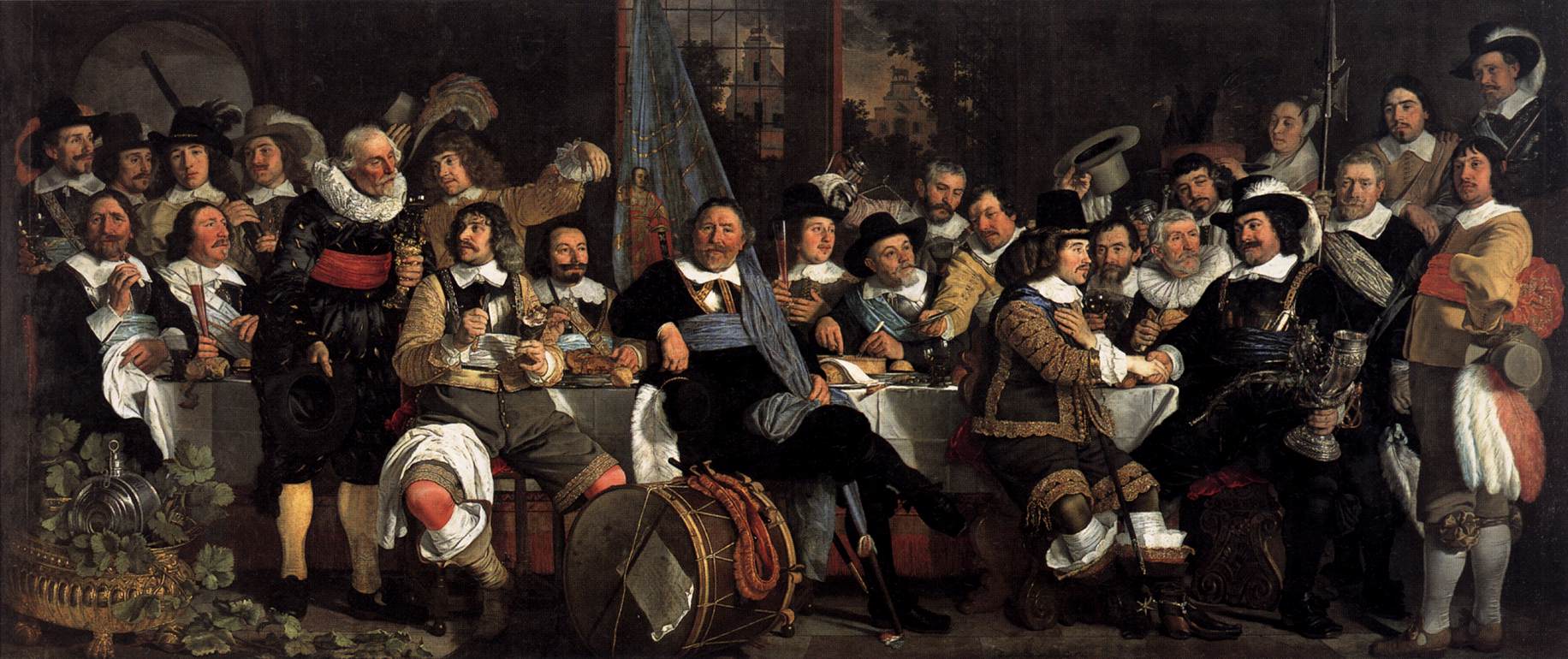
A 69-year-old man has been arrested after hurling a "caustic substance" at a 17th-century painting at The Rijksmuseum in Amsterdam on Sunday. The New York Times report is here. You can see the painting, "Celebration of the Peace of Münster" (1648) by Bartholomeus van der Helst, here. Apparently the attacker is "a known vandal whose picture had been circulated among guards, but he was not recognized when he entered." It's also not the first incident of vandalism at the museum: "Another van der Helst painting at the Rijksmuseum was attacked with a knife in 1989, and in 1990 the museum's best-known painting, Rembrandt's 'Nightwatch' (1642), was sprayed with hydrochloric acid."

Monday, June 26, 2006
Sam Waksal Sales Tax Evasion
The New York Law Journal has a report ($) this morning on the New York State Division of Tax Appeals' affirmance of a fraud penalty against ImClone founder (and Martha Stewart pal) Sam Waksal for failing to pay sales taxes on over $15 million worth of art. Waksal is currently serving a seven-year federal prison sentence for insider trading. As part of his insider trading guilty plea, he admitted that he bought works from a gallery in Manhattan but had the invoices sent to an address in New Jersey to evade New York taxes. New York State followed up by assessing sales and use taxes, plus fraud penalties (and interest), amounting to more than $1.8 million. The court rejected Waksal's claim that he only did what "many, many" others have done and was therefore being singled out for unduly harsh treatment: "[T]here is absolutely no basis to conclude that the Tax Law has been selectively enforced against petitioner."
Sunday, June 25, 2006
More on the Joyce Estate
John Naughton had this piece in the UK Observer this weekend on the lawsuit that was recently filed against the James Joyce estate, which I wrote about here. He says that, "given that the entire publishing world has been legally intimidated by Stephen Joyce for decades, this is a landmark action. And the case will be followed with interest in every jurisdiction in which works on James Joyce are published." And ends with this prediction: "Lessig decided to take on [the] case pro bono and will be backed by the formidable resources of Stanford Law School. So the stage is set for one of the most interesting legal confrontations of our times. Stephen [Joyce] has had things his own way for many years, partly because of his implacable determination to protect his grandfather's legacy, but also because publishers have invariably backed down when confronted with the prospect of the litigation he has been willing to unleash. I have a hunch he may have finally met his match." I wouldn't back up that hunch with a lot of money; "copyright misuse," the theory under which the case has been brought, is not an easy thing to establish. But Naughton is certainly right that this is a case that will be very closely watched, here and elsewhere.
Berry-Hill Bankruptcy
The Financial Times had this update this weekend on the Berry-Hill gallery bankruptcy proceeding.
Ruscha Mural Update
In my catch-up post after having been away for a few days last week, I somehow neglected to mention this Los Angeles Times update on the painted over Ed Ruscha mural, all the more inexcusable since I'm quoted in it.
Thursday, June 22, 2006
Estate Tax Compromise?
A couple of weeks ago I mentioned a New York Times story that said "negotiators appeared unable to reach [an estate tax] deal before the end of this week — if ever." Greg Mankiw reports that "ever" may be here soon. The latest proposal would (a) increase the exemption amount to $5 million per person starting in 2010, (b) reduce the rate on estates up to $25 million to the capital gains tax rate (currently 15 percent), and (c) reduce the rate on estates of $25 million or more to twice the capital gains rate. Mankiw says "this legislation could get the necessary 60 votes in the Senate and put an end to the tremendous uncertainty now surrounding the future of the estate tax."
Vase-Smasher Speaks
Nick Flynn, in his own words: "I had no idea my accident was going to turn into an international news story." (Related posts here, here, and here.)
Is art a good investment?
Daniel Gross says yes at slate.com. Tyler Cowen is (convincingly) skeptical:
"Studies of auction prices are usually biased toward the winners; the losers never go on the block again or are sold quietly at a loss through dealers. Many pieces turn out to be fakes. The placement costs in the dealer market can be higher than those at Sotheby's. Storage and insurance costs for masterpieces are considerable. Art is so much fun it can't earn the same rate of return as equity, otherwise no one would buy stocks."
At the end of his piece, Gross mentions the Artist Pension Trust, a kind of 401(k) plan for artists, whereby they pool their work and then share in the proceeds of sales from the pool. Cowen was skeptical of this too.
"Studies of auction prices are usually biased toward the winners; the losers never go on the block again or are sold quietly at a loss through dealers. Many pieces turn out to be fakes. The placement costs in the dealer market can be higher than those at Sotheby's. Storage and insurance costs for masterpieces are considerable. Art is so much fun it can't earn the same rate of return as equity, otherwise no one would buy stocks."
At the end of his piece, Gross mentions the Artist Pension Trust, a kind of 401(k) plan for artists, whereby they pool their work and then share in the proceeds of sales from the pool. Cowen was skeptical of this too.
Tuesday, June 20, 2006
The $135 million painting
Carol Vogel had this report in The New York Times yesterday on Ronald Lauder's purchase, for the Neue Galerie, of a 1907 Klimt portrait for a record $135 million. The painting was for many years the subject of a restitution battle with the Austrian government. In January, it was returned, along with four other Nazi-looted Klimt paintings, to descendants of the original owner, who will now share the sales proceeds. A couple years back, Tyler Cowen had this post on what else you can buy for $100 million.
Catching Up
A few quick hits on stories that have been mentioned here before:
- Nick Flynn, the guy who tripped over his shoelaces and into three 17th Century Qing dynasty vases in January (previously mentioned here and here), has been cleared of any criminal charges. "I can say with my hand on my heart that it was not deliberate," he says.
- The Brooklyn College MFA students have brought their threatened First Amendment lawsuit against the city and the school.
- An eavesdropping lawsuit brought by "painter of light" Thomas Kinkade in Michigan state court (against the lawyers for a former Kinkade art gallery that recently obtained an $860,000 arbitration award against him) has been dismissed.
Thursday, June 15, 2006
Monday, June 12, 2006
The Power of the Estate (UPDATED)
This week's New Yorker has a fascinating article by D.T. Max about James Joyce's grandson, Stephen Joyce, who rules the Joyce estate with an iron fist. Max reports that, among other things, Stephen has "attempted to block the publication of dozens of scholarly works" and "rejects nearly every request to quote from unpublished letters." Given how soft a concept "fair use" is, "Joyceans are often unsure if they are violating the law, and when the estate objects they usually give in." One scholar who had a run in with the estate over her biography of James Joyce's mentally troubled daughter is now planning a lawsuit, with the pro bono help of Stanford law professor/IP rock star Lawrence Lessig. Lessig believes it will be the first time a literary estate has been sued on a theory of "copyright misuse." Judge Posner, guest-blogging at Lessig's blog, discussed the misuse theory here.
UPDATE: The lawsuit is on.
ANOTHER UPDATE: Lessig blogs about the suit here, including a link to the complaint.
UPDATE: The lawsuit is on.
ANOTHER UPDATE: Lessig blogs about the suit here, including a link to the complaint.
Sunday, June 11, 2006
The Missing Piece
The cover story of The New York Times Sunday real estate section today is about a man who's looking to trade a Maurice Sendak watercolor for a Manhattan apartment, but it leaves out a very important part of the equation: income taxes.
Near the end, the article does note that the seller of the apartment would have to include the value of the bartered work as part of the purchase price received. But it's equally important to mention that the buyer of the apartment also has to pay income tax on the value of the bartered work -- it would be as if he sold the Sendak for cash and then used the cash to buy the apartment. So if the Sendak is really worth $650,000, as the owner suggests in this article, he'd have $650,000 of income to pay taxes on (but no cash from the sale with which to pay it). This is exactly what got artist Peter Max into trouble a decade ago: bartering paintings for real estate and failing to declare the "sale" of the paintings on his income tax returns.
Near the end, the article does note that the seller of the apartment would have to include the value of the bartered work as part of the purchase price received. But it's equally important to mention that the buyer of the apartment also has to pay income tax on the value of the bartered work -- it would be as if he sold the Sendak for cash and then used the cash to buy the apartment. So if the Sendak is really worth $650,000, as the owner suggests in this article, he'd have $650,000 of income to pay taxes on (but no cash from the sale with which to pay it). This is exactly what got artist Peter Max into trouble a decade ago: bartering paintings for real estate and failing to declare the "sale" of the paintings on his income tax returns.
Saturday, June 10, 2006
Ruscha Mural Update
This (opinion) piece in the LA Times says Kent Twitchell has already filed suit over the painting over of his Ed Ruscha mural in downtown LA, which I posted about last week here.
Really Alternative Dispute Resolution
There have been a number of news stories the last few days, including in The New York Times, about the federal judge in Florida who ordered two lawyers to play a game of "rock, paper, scissors" to settle a trivial discovery dispute they were having (about where to conduct the deposition of a witness). Last year the president of a Japanese electronics company used the same game to decide whether Christie's or Sotheby's should sell the company's $20-plus million art collection (Christie's won). Here is the website of the World Rock Papers Scissors Society ("serving the needs of decision makers since 1918"). Eugene Volokh points out that "such random (or close to random) decisionmaking isn't entirely novel to the legal system."
Graffiti Preliminary Injunction Upheld
The Second Circuit has upheld a preliminary injunction granted by a district court judge last month barring enforcement of a New York City law outlawing the possession of spray paint and fat-tipped markers to people under 21. I mentioned the lower court decision here.
Friday, June 09, 2006
Shoplifting in Chelsea
According to artnet.com:
"'Luxury Goods,' a new group show organized by art collector Beth Rudin DeWoody for athleen Cullen Fine Arts in Chelsea, seems to have drawn a special kind of viewer -- the shoplifting kind. A few days after the opening, someone surreptitiously snatched a work by John Findysz titled Tom on Tom (ca. 1998), a pair of vintage Gucci loafers covered with a collage of images from a Tom of Finland book. The work is worth $3,000, and the gallery is offering a reward for its return."
"'Luxury Goods,' a new group show organized by art collector Beth Rudin DeWoody for athleen Cullen Fine Arts in Chelsea, seems to have drawn a special kind of viewer -- the shoplifting kind. A few days after the opening, someone surreptitiously snatched a work by John Findysz titled Tom on Tom (ca. 1998), a pair of vintage Gucci loafers covered with a collage of images from a Tom of Finland book. The work is worth $3,000, and the gallery is offering a reward for its return."
Thursday, June 08, 2006
Estate Tax Survives
The push to eliminate the estate tax appears to be dead, at least for now. According to The New York Times, "though a handful of lawmakers continued to search for a compromise that could pass, negotiators appeared unable to reach a deal before the end of this week — if ever." That leaves things as the mess they are. Under current law, the tax applies to estates worth more than $2 million. The exemption amount is increased to $3.5 million in 2009, until, in 2010, the estate tax disappears entirely -- but only for a year. In 2011, it returns in its pre-2001 incarnation (including a per-person exemption of only $1 million).
Maybe it was Conceptual Art
This New York Times report yesterday on the bribery investigation involving Congressman William Jefferson included this tidbit:
"In the affidavit, an F.B.I. agent ... said cellphone records suggested that Mr. Jefferson visited a home owned by Mr. Abubakar and his wife in Potomac, Md., an affluent suburb of Washington, around midnight last July 31 with the intention of delivering money to the Nigerian leader while he was on a visit to the United States. The next day, the F.B.I. said, Mr. Jefferson told a confidential informant that he had delivered 'African art' — which the agent described as code for a cash payment — and that Mr. Abubakar 'was very pleased.'"
"In the affidavit, an F.B.I. agent ... said cellphone records suggested that Mr. Jefferson visited a home owned by Mr. Abubakar and his wife in Potomac, Md., an affluent suburb of Washington, around midnight last July 31 with the intention of delivering money to the Nigerian leader while he was on a visit to the United States. The next day, the F.B.I. said, Mr. Jefferson told a confidential informant that he had delivered 'African art' — which the agent described as code for a cash payment — and that Mr. Abubakar 'was very pleased.'"
Tuesday, June 06, 2006
Nazi-looted Art
The Jerusalem Post reports on a recently established website that includes a searchable database of objects believed to have been looted during World War II, and also allows claimants to list objects they believe were taken from their families.
Monday, June 05, 2006
Warhol and Capital Punishment
The forthcoming California Law Review will have this essay by Bennett Capers. Here's the abstract:
"This essay explores the dialogic relationship between art and the law, and argues that an examination of Andy Warhol's Electric Chair paintings, and our collective response to the paintings, broadens the legal discourse on capital punishment in this country. The essay contends that the paintings, and their iconic status in our culture, call attention to our fascination with death in general, to state-administered death in particular, to the spectacle of capital punishment, and to our history of obtaining pleasure by gazing upon death. It also argues that Warhol poses an important question, one that implicates race and gender and religion and disability and age and comfort: Who are we comfortable visualizing in the chair? "
"This essay explores the dialogic relationship between art and the law, and argues that an examination of Andy Warhol's Electric Chair paintings, and our collective response to the paintings, broadens the legal discourse on capital punishment in this country. The essay contends that the paintings, and their iconic status in our culture, call attention to our fascination with death in general, to state-administered death in particular, to the spectacle of capital punishment, and to our history of obtaining pleasure by gazing upon death. It also argues that Warhol poses an important question, one that implicates race and gender and religion and disability and age and comfort: Who are we comfortable visualizing in the chair? "
Painted Over Mural
The LA Times reported over the weekend that Kent Twitchell's iconic six-story mural in downtown Los Angeles depicting Ed Ruscha was recently painted over -- it's still not clear by whom. The story correctly notes that "works of public art are protected by law, including the federal Visual Artists Rights Act" -- but leaves out that, because the mural was apparently completed before the statute's 1991 effective date, VARA probably doesn't apply. (I say "probably" because there is an exception under which works created before the effective date, but to which the artist retained title through the effective date, are covered. It's impossible to tell from the news reports so far when, if ever, Twitchell relinquished title to the work.) The California moral rights statute has been in effect since 1979, however, and apparently was the basis for an earlier lawsuit by Twitchell over a 1974 mural that was painted over by a billboard company in 1986. An emotional follow-up piece in the Times by Christopher Knight indicates that a $175,000 settlement was reached the day before the earlier case went to trial. Knight adds: "Adjusted for inflation that's almost $250,000 today, for a smaller mural of more popular interest and less artistic significance than 'The Ed Ruscha Monument.'" Twitchell says he plans to sue again this time.
Good & Plenty
Tyler Cowen's well worth reading Good & Plenty includes the following interesting discussion of how the Internet has affected the visual arts:
"To date the visual arts have not experienced serious copyright problems with the Internet. Many individuals post unauthorized copies of paintings and other artworks, but these copies have not disrupted the markets for the originals. The difference in market value between an original artwork, even a print, and a digital copy of that artwork remains enormous. In contrast copies of literature or recorded music are worth almost as much as the original."
But, he adds, "we nonetheless can imagine a more distant future when [technology] allows for the very accurate reproduction of visual artworks." What happens when people can easily have "their own copies of the Mona Lisa or of a Monet haystack painting" that is "indistinguishable from the original to the naked eye"?
His answer is that it "would not spell doom for the art world." First, the original would probably still be worth much more than the copy: "The price difference between an original artwork and a copy, even a very good copy, is significant. Experts have been fooled many times by artistic copies, frauds, and forgeries. But once an artwork is revealed to be nonauthentic, its value plummets immediately . . . . Buyers care about the aura of the original and its symbolic value, even when they cannot tell the difference between the real and the copy."
He goes on to speculate, to my mind less persuasively, about the possibility that the difference in value between fakes and real artworks might disappear or at least narrow over time.
The book is available here. Cowen's (excellent) blog, which often touches on arts issues (for example), is here.
"To date the visual arts have not experienced serious copyright problems with the Internet. Many individuals post unauthorized copies of paintings and other artworks, but these copies have not disrupted the markets for the originals. The difference in market value between an original artwork, even a print, and a digital copy of that artwork remains enormous. In contrast copies of literature or recorded music are worth almost as much as the original."
But, he adds, "we nonetheless can imagine a more distant future when [technology] allows for the very accurate reproduction of visual artworks." What happens when people can easily have "their own copies of the Mona Lisa or of a Monet haystack painting" that is "indistinguishable from the original to the naked eye"?
His answer is that it "would not spell doom for the art world." First, the original would probably still be worth much more than the copy: "The price difference between an original artwork and a copy, even a very good copy, is significant. Experts have been fooled many times by artistic copies, frauds, and forgeries. But once an artwork is revealed to be nonauthentic, its value plummets immediately . . . . Buyers care about the aura of the original and its symbolic value, even when they cannot tell the difference between the real and the copy."
He goes on to speculate, to my mind less persuasively, about the possibility that the difference in value between fakes and real artworks might disappear or at least narrow over time.
The book is available here. Cowen's (excellent) blog, which often touches on arts issues (for example), is here.
Sunday, June 04, 2006
Authenticating the Authenticator (UPDATED)
You never know where you'll find some art law. James Wood's review of Peter Carey's new book, Theft: A Love Story, in the new issue of the London Review of Books, begins this way:
"Last year, Louis Knickerbocker, a meat distributor from Newport Beach, California, bought a Picasso drawing from the online service of Costco for $40,000. Knickerbocker thought it a steal: ‘They just sell the top quality,’ he told the New York Times, ‘whatever you buy at Costco, whether it’s a washing-machine or a vacuum cleaner. I just thought, if it’s a Picasso, you can’t go wrong.’
"But it may have been a steal too far. The drawing had been verified by an art appraiser in Florida, and it came with a certificate of authenticity signed by Picasso’s daughter Maya Widmaier-Picasso. When the Times contacted her, however, Picasso’s daughter promptly denounced the certificate as a forgery. She explained to the paper that a real certificate was marked with one or more of her fingerprints and then embossed with her seal. Here there were errors of French, and the handwriting wasn’t hers. Yet the buyer seemed cheerfully undeterred: ‘Seeing as she signed a lot of those things, who knows how many years ago,’ he told the newspaper, ‘I’m not surprised if she’s going to say that it’s fake unless she has it in front of her.’ In this delicious transference, from the authenticity of the drawing to the authenticity of the authenticator, why shouldn’t the final verdict lie with the buyer, who in a Stanley Fishy way has simply asserted his right to authenticate?"
I previously mentioned the case of the Costco Picasso here.
UPDATE: Somewhat related piece in The Financial Times here.
"Last year, Louis Knickerbocker, a meat distributor from Newport Beach, California, bought a Picasso drawing from the online service of Costco for $40,000. Knickerbocker thought it a steal: ‘They just sell the top quality,’ he told the New York Times, ‘whatever you buy at Costco, whether it’s a washing-machine or a vacuum cleaner. I just thought, if it’s a Picasso, you can’t go wrong.’
"But it may have been a steal too far. The drawing had been verified by an art appraiser in Florida, and it came with a certificate of authenticity signed by Picasso’s daughter Maya Widmaier-Picasso. When the Times contacted her, however, Picasso’s daughter promptly denounced the certificate as a forgery. She explained to the paper that a real certificate was marked with one or more of her fingerprints and then embossed with her seal. Here there were errors of French, and the handwriting wasn’t hers. Yet the buyer seemed cheerfully undeterred: ‘Seeing as she signed a lot of those things, who knows how many years ago,’ he told the newspaper, ‘I’m not surprised if she’s going to say that it’s fake unless she has it in front of her.’ In this delicious transference, from the authenticity of the drawing to the authenticity of the authenticator, why shouldn’t the final verdict lie with the buyer, who in a Stanley Fishy way has simply asserted his right to authenticate?"
I previously mentioned the case of the Costco Picasso here.
UPDATE: Somewhat related piece in The Financial Times here.
Wednesday, May 31, 2006
Chihuly In The Times (UPDATED)
The New York Times catches up with the Dale Chihuly copyright lawsuit we've been following closely, most recently here.
UPDATE: Now that the lawsuit's made it to the front page of the Times, lots of commentary.
Professor Patry properly identifies "the essence of the dispute" as "the possible attempt by Mr. Chihuly to assert rights over techniques and style." He says it is "the scope of [Chihuly's] claims that are the most troubling." In the comments, he also points to a District Court opinion by Judge Leval (Fisher v. Klein, 16 USPQ2d 1795 (S.D.N.Y. 1990)) that "has some good discussion about sculptuors being able to employ assistants and still remaining sole authors" (which goes to the second of the two issues the Chihuly case presents; see my earlier discussion here).
Professor Ed Lee agrees "that there's a danger in allowing a broad assertion of copyright over a style of glass art, but without seeing the competing works, I'm not sure that's what this case involves. At least in the NYT, Chihuly says he only wants to stop the 'knock off' or verbatim copying of his work."
Professor Althouse first wonders why is this a copyright case and not a contracts case: "If Chihuly hired Rubino and kept him on for 14 years, why did he he never make Rubino sign a contract that would have limited Rubino from making similar shapes to sell on his own?" I must say I'm not aware of any artist requiring his studio assistants to sign something like that. And corporate law prof Gordon Smith suggests in the comments that such a contract might not be enforceable in any event: "Employers cannot use contracts to prevent their former employees from using general skills or knowledge that they have acquired in their employment. So it seems to me that Chihuly would not be able to prevent Rubino from working as a glassblower. The issue would be whether Chihuly could restrict Rubino's glassblowing in any meaningful way while passing judicial muster. The test for covenants not to compete is 'reasonability.' Restrictions usually fall into three categories: geographic, temporal, and subject matter. Chihuly would not benefit much from a geographic restriction ('you can't make glass sculptures in California') and any meaningful temporal restrictions would likely be unreasonable ('you can't blow glass for 10 years'). Would he be able to describe the subject matter of his sculptures with sufficient precision to craft a meaningful constraint on Rubino? Maybe. Would a court think that is reasonable? Hmm. I don't remember ever seeing a case quite like the one you imagine."
As to the infringement claim, Althouse notes: "Artists are always copying each other's styles. It's disturbing to think that they should have to worry about being sued by the more successful artists who came before them. The old could prey on the young mercilessly, and the development of artistic styles would be crippled by litigious artists." She also makes the point, responding to a commenter who said "I had no idea that Chihuly didn't blow his own sculptures": "Right. Who did? He's publicizing the information himself by bringing the lawsuit. Plus, he's bullying another artist. Even if his claim is sound, it might not have been wise to sue . . . . This is hurtful to Chihuly's reputation, even if he wins. I'm just saying that you have to think through everything before suing. You may feel aggrieved, but you have to picture what the opponent will throw back at you. Someone who never would have sued you will now come up with defenses and counterclaims, and there will be articles like this one on the front page of the NYT."
Law prof Mike Madison addresses the co-authorship angle: "Take a look at this exhibit: a fax from the plaintiff to the defendant that communicates some sketches — and adds, 'Here’s a little sketch but make whatever you want.' At the least, this sounds to me like the defendant has a plausible claim of joint authorship with respect to at least some of the plaintiff’s works." But I think Professor Tushnet has the better of this argument: "I'm not sanguine about the chances of joint authorship, which in the 9th Circuit (among others) requires that the person who was generally considered the author before the dispute erupted to have intended to treat his collaborator as a joint author. And the reason that Chihuly's name is on the works -- he's the core of the business, the author-figure on whom a large industry is founded -- is good reason to believe he didn't intend that, no matter what the collaborator thought. If Chihuly contributed any copyrightable expression at all, he will probably get 100% ownership."
And patent lawyer Steve Barns has a nice bottom line summary: "Chihuly may have developed a distinctive style of blowing glass but the style is not copyrightable, only the specific expressions of that style (the individual pieces) are copyrightable. Copyright policy is not to protect an artist’s ‘signature style’ but to reward the artist for creating individual works. Just as Picasso cannot sue all cubists, Chihuly shouldn't be able to prevent glass artists from making 'lopsided creations, and other designs inspired by the sea.'"
UPDATE: Now that the lawsuit's made it to the front page of the Times, lots of commentary.
Professor Patry properly identifies "the essence of the dispute" as "the possible attempt by Mr. Chihuly to assert rights over techniques and style." He says it is "the scope of [Chihuly's] claims that are the most troubling." In the comments, he also points to a District Court opinion by Judge Leval (Fisher v. Klein, 16 USPQ2d 1795 (S.D.N.Y. 1990)) that "has some good discussion about sculptuors being able to employ assistants and still remaining sole authors" (which goes to the second of the two issues the Chihuly case presents; see my earlier discussion here).
Professor Ed Lee agrees "that there's a danger in allowing a broad assertion of copyright over a style of glass art, but without seeing the competing works, I'm not sure that's what this case involves. At least in the NYT, Chihuly says he only wants to stop the 'knock off' or verbatim copying of his work."
Professor Althouse first wonders why is this a copyright case and not a contracts case: "If Chihuly hired Rubino and kept him on for 14 years, why did he he never make Rubino sign a contract that would have limited Rubino from making similar shapes to sell on his own?" I must say I'm not aware of any artist requiring his studio assistants to sign something like that. And corporate law prof Gordon Smith suggests in the comments that such a contract might not be enforceable in any event: "Employers cannot use contracts to prevent their former employees from using general skills or knowledge that they have acquired in their employment. So it seems to me that Chihuly would not be able to prevent Rubino from working as a glassblower. The issue would be whether Chihuly could restrict Rubino's glassblowing in any meaningful way while passing judicial muster. The test for covenants not to compete is 'reasonability.' Restrictions usually fall into three categories: geographic, temporal, and subject matter. Chihuly would not benefit much from a geographic restriction ('you can't make glass sculptures in California') and any meaningful temporal restrictions would likely be unreasonable ('you can't blow glass for 10 years'). Would he be able to describe the subject matter of his sculptures with sufficient precision to craft a meaningful constraint on Rubino? Maybe. Would a court think that is reasonable? Hmm. I don't remember ever seeing a case quite like the one you imagine."
As to the infringement claim, Althouse notes: "Artists are always copying each other's styles. It's disturbing to think that they should have to worry about being sued by the more successful artists who came before them. The old could prey on the young mercilessly, and the development of artistic styles would be crippled by litigious artists." She also makes the point, responding to a commenter who said "I had no idea that Chihuly didn't blow his own sculptures": "Right. Who did? He's publicizing the information himself by bringing the lawsuit. Plus, he's bullying another artist. Even if his claim is sound, it might not have been wise to sue . . . . This is hurtful to Chihuly's reputation, even if he wins. I'm just saying that you have to think through everything before suing. You may feel aggrieved, but you have to picture what the opponent will throw back at you. Someone who never would have sued you will now come up with defenses and counterclaims, and there will be articles like this one on the front page of the NYT."
Law prof Mike Madison addresses the co-authorship angle: "Take a look at this exhibit: a fax from the plaintiff to the defendant that communicates some sketches — and adds, 'Here’s a little sketch but make whatever you want.' At the least, this sounds to me like the defendant has a plausible claim of joint authorship with respect to at least some of the plaintiff’s works." But I think Professor Tushnet has the better of this argument: "I'm not sanguine about the chances of joint authorship, which in the 9th Circuit (among others) requires that the person who was generally considered the author before the dispute erupted to have intended to treat his collaborator as a joint author. And the reason that Chihuly's name is on the works -- he's the core of the business, the author-figure on whom a large industry is founded -- is good reason to believe he didn't intend that, no matter what the collaborator thought. If Chihuly contributed any copyrightable expression at all, he will probably get 100% ownership."
And patent lawyer Steve Barns has a nice bottom line summary: "Chihuly may have developed a distinctive style of blowing glass but the style is not copyrightable, only the specific expressions of that style (the individual pieces) are copyrightable. Copyright policy is not to protect an artist’s ‘signature style’ but to reward the artist for creating individual works. Just as Picasso cannot sue all cubists, Chihuly shouldn't be able to prevent glass artists from making 'lopsided creations, and other designs inspired by the sea.'"
Berry-Hill Bankrupcty
As part of its bankruptcy proceedings, Berry-Hill Galleries is selling its E. 70th St. headquarters. The property is listed at $20 million; bids are due June 12. The gallery filed for Chapter 11 protection last December, but the listing indicates that "this is a court supervised sale, sold free and clear."
Today in Art Theft
Lots of international art theft news today. In England, two more bronze statues have become the latest in what police believe is a scheme to grab artworks solely for their scrap value (mentioned earlier here). In Turkey, two 6th Century BC artifacts -- which were returned to Turkey in 1993 after the Metropolitan Museum admitted it had known they were stolen when it purchased them-- have been stolen again, this time from a museum in western Turkey. (The thieves had replaced them with fakes.) Nine people, including the director of the museum, have been arrested. And in Canada, 30 paintings, 10 sculptures, and about 30 pieces of jewelry by various artists were stolen from a group show at the Blink Gallery in Ottawa. They even took the labels for the pieces.
Tuesday, May 30, 2006
"The Last of the Real Soft Touches"
The New York Times had a piece this weekend on artists and their participation in the increasing number of benefit auctions. Lots of interesting stuff, but from an art law perspective the story made two important points: (1) When an artist donates her own work, she gets an income tax deduction equal only to the cost of materials (though there currently is, as there has been off and on for years, proposed legislation to change that); and (2) When a collector donates a work to be sold, the tax deduction is equal to the price she paid for it (as opposed to its fair market value, as would be the case if the work were donated to a museum for exhibition). The latter is a result of the so-called "related use" rule of section 170(e)(1) of the Internal Revenue Code, which requires that the use of the donated property by the recipient organization be related to the purpose constituting the basis for its tax-exempt status. So a donation of a work of art to an art musuem is (generally) a related use, and the donor gets an income tax deduction for the full fair market value of the work. But if the same work is donated to an arts organization for inclusion at a benefit auction, that's an unrelated use and the donor's tax deduction will be limited to what she paid for the work.
Thursday, May 25, 2006
"A slap in the face, an act of misguided love"
That's what Jerry Saltz calls Triple Candie gallery's just concluded exhibition of "re-created" Cady Nolands -- re-created, that is, without her permission. He says "if I were Cady Noland I'd think about getting a lawyer to get medieval on Triple Candie." Given what it costs to get a lawyer to get medieval (or even Early Modern) on people, however, and the likelihood that a lawsuit, and its attendant publicity, is exactly what the gallery is looking for, this may have been a case where discretion was indeed the better part of valor. But there's no question that Triple Candie's actions here amounted to a blatant violation of Noland's copyrights.
Tuesday, May 23, 2006
Brooklyn College Show to Reopen
The New York Times reports that the Brooklyn College MFA show is opening in its new Dumbo location Wednesday night. The students still say they are planning a First Amendment lawsuit against the city.
"One of the most lucrative art scams in years"
Canada's Globe and Mail reports on the latest art scam: forgers purchasing (authentic) works by relatively minor European artists, "altering them in a process known as 'Russification,' painting on the signature of major Russian artists, and selling them for many times their worth." A curator at the National Museum of Russian Fine Art is quoted as saying he believes "at least 120" paintings have been purchased throughout Europe at prices ranging from $1,000 to $20,000 and then "Russified" and resold for as much as $1 million.
At Least The Litigators Will Be Grateful (UPDATED)
The May Entertainment Law Reporter has the following take on the Bill Graham Archives fair use decision:
"On the whole, this opinion doesn’t uniformly benefit or harm the entire entertainment industry. Instead, it invites litigation (instead of licensing) on a case-by-case basis. . . . The difficulty with the 'fair use' doctrine – and especially this opinion’s expansive notion of 'transformative use' – is that determining which uses actually are 'fair' requires litigation that almost always will be more expensive than a license would have been."
I had a similar reaction here (and here).
UPDATE: Professor Lessig thinks the decision is "fantastic."
"On the whole, this opinion doesn’t uniformly benefit or harm the entire entertainment industry. Instead, it invites litigation (instead of licensing) on a case-by-case basis. . . . The difficulty with the 'fair use' doctrine – and especially this opinion’s expansive notion of 'transformative use' – is that determining which uses actually are 'fair' requires litigation that almost always will be more expensive than a license would have been."
I had a similar reaction here (and here).
UPDATE: Professor Lessig thinks the decision is "fantastic."
Monday, May 22, 2006
Chrismas Spirit
The L.A. Times reports this weekend on a lawsuit filed by Greek artist Jannis Kounellis against veteran dealer Doug Chrismas. The lawsuit, in Los Angeles Superior Court, says Kounellis consigned more than $4 million worth of art to Chrismas, who then "ke[pt] most of the profits and refus[ed] to return the pieces that did not sell." The complaint seeks punitive damages of "no less than $20 million." Punitive damages are rarely awarded in breach of contract actions, but presumably the complaint includes other claims as well (e.g., breach of fiduciary duty). Chrismas is no stranger to the legal system -- the Times reports that in the 1980's he pleaded no contest to criminal charges that he stole works by Rauschenberg, Warhol, Stella, and Judd and he's filed for Chapter 11 bankruptcy protection "at least six times" since 1982 -- but in this case he basically waves the white flag, telling the Times he is "doing a full accounting of the proceeds ... -- minus the expense of exhibiting [the work]" -- and is returning all the unsold pieces. One interesting question is whether he has the right to deduct the exhibition expenses. Normally that's determined by the parties' agreement -- which, in this case, was oral. In a post discussing the lawsuit, Caryn at art.blogging.la says: "I think that a contract is necessary and, most importantly, it opens up a discussion of what is expected of both gallery and artist and then it's agreed upon in writing. A contract is proof that your terms have been discussed and, in my opinion, if someone doesn't want to draw up and sign an agreed upon contract, something is fishy." I couldn't agree more.
Friday, May 19, 2006
Damages for Infringement-Induced Depression?
An interesting decision by Judge Haight in the Southern District this week (no free link that I can find, but NYLJ subscribers can access the decision, Gary Price Studios Inc. v. Randolph Rose Collection Inc., here), excluding proffered expert witness testimony as to the overall "productivity loss" caused by defendant's alleged copyright infringement. The case involves four bronze sculptures that were allegedly infringed. The expert was prepared to testify that the artist's "awareness of Defendants' alleged infringements so distracted and diverted him that [his] creative focus and energies were diminished and the number of his created sculptures were consequently reduced." Noting that "such a damages theory leads inevitably to the highly subjective and personal subtleties and mysteries of artistic creation," and quoting a Wordsworth sonnet, Judge Haight rejected the proposed testimony "without difficulty": "The services of the sensitive mind and heart demanded by Creative Art are subject to inexplicable obstacles. ... In my view, the ... productivity loss theory advanced by [the expert] cannot be tested within the context of the mysterious ebb and flow of an artist's creative powers." On the other hand . . . Judge Haight did not hold that copyright damages could never include this sort of productivity loss -- just that expert testimony could not be introduced on the subject: "The jury is capable without assistance from [the proffered expert] to determine [if] Defendants' conduct served to diminish Price's creative output, and, if it finds such effect occurred, to determine Plaintiffs' resulting economic loss on the basis of the fact witnesses available to Plaintiff and the Court's instructions on the law of damages in copyright infringement cases."
Grateful Dead Decision
Robert Bernstein and Robert Clarida have a piece in today's New York Law Journal ($) on the Second Circuit's fair use decision in the Grateful Dead case that I posted about earlier in the week. They conclude that the decision "has strengthened the arsenal of defendants in fair use cases." That's certainly true, though, as I argued earlier, the decision -- involving seven shrunken images in a 480-page book containing over 2,000 images in total -- strikes me as too fact-specific to be really useful.
Through A Glass Darkly
The Seattle Times has the latest on the increasingly contentious lawsuit between Dale Chihuly and a former studio assistant. There seem to be two things going on:
1. As a defense to Chihuly's copyright infringement claims, the assistant is invoking the familiar idea-expression distinction. His counterclaim accuses Chihuly of seeking "a monopoly on any and all glass art that is curved, nested or uses certain kinds of colors. [Chihuly] cannot use copyright registrations to protect an idea or process that is so elementary that it would preclude any other glass artist from working or creating any glass art at all."
2. Beyond that, the assistant is apparently claiming co-authorship rights in a number of Chihuly works, which, among other things, would entitle him to a share of the profits from exploitation of those works. This is obviously a more radical claim: Absent an express agreement to the contrary, I'm not aware of a single case where a studio assistant was awarded co-authorship rights in a case like this. (Seattle P-I art critic Regina Hackett touched on this issue in a recent profile of Chihuly: "Throughout art history, artists have used assistants, sometimes liberally, but in the 20th century artists directly challenged the idea that art is more valuable as a hands-on operation. From Marcel Duchamp to Andy Warhol, Jeff Koons, Lawrence Weiner and Robert Gober, artists say that hands-on production is a choice, not an imperative.")
1. As a defense to Chihuly's copyright infringement claims, the assistant is invoking the familiar idea-expression distinction. His counterclaim accuses Chihuly of seeking "a monopoly on any and all glass art that is curved, nested or uses certain kinds of colors. [Chihuly] cannot use copyright registrations to protect an idea or process that is so elementary that it would preclude any other glass artist from working or creating any glass art at all."
2. Beyond that, the assistant is apparently claiming co-authorship rights in a number of Chihuly works, which, among other things, would entitle him to a share of the profits from exploitation of those works. This is obviously a more radical claim: Absent an express agreement to the contrary, I'm not aware of a single case where a studio assistant was awarded co-authorship rights in a case like this. (Seattle P-I art critic Regina Hackett touched on this issue in a recent profile of Chihuly: "Throughout art history, artists have used assistants, sometimes liberally, but in the 20th century artists directly challenged the idea that art is more valuable as a hands-on operation. From Marcel Duchamp to Andy Warhol, Jeff Koons, Lawrence Weiner and Robert Gober, artists say that hands-on production is a choice, not an imperative.")
Wednesday, May 17, 2006
Injunctions
Professor Nimmer has a good post on the Supreme Court's decision in the much-discussed EBay patent case yesterday (which includes some discussion of copyright as well). His bottom line: "So, what happened here? Very little. In my view, the most important result is that the Court affirmed the right of a property owner to prevent use of its property in most cases. The risk avoided by the Court was that this case would be a vehicle to diminish the strength of patents and copyrights as property. The Supreme Court got it right by rejecting that result."
$150,000,000 for the Barnes
The Barnes Foundation has raised the $150 million it says it needs to move to downtown Philadelphia. I previously posted about the move, which raises difficult questions involving "settlor's intent," here.
Long Strange Trip
The New York Law Journal ($) reports on a Second Circuit decision holding that reproductions of seven concert posters in a book on the Grateful Dead was a fair use. The publisher had tried to get a license to use the images from the copyright-holder, but went ahead and used them when permission was refused. A friend who is an eminent copyright lawyer emailed to say the opinion is "smart and important," but I'm not so sure, at least about the "important" part. The decision strikes me as just another case-specific application of the four fair use factors. This court found they tipped in the defendant's favor, but one can just as easily imagine another court coming to the opposite conclusion on the exact same facts. So things are just as uncertain as they were before this decision. No one really knows whether or not a given use is permitted. At the end of the day, the best definition of "fair use" remains Larry Lessig's: the right to hire a lawyer.
Sunday, May 14, 2006
Kozlowski Sales Tax Deal
Dennis Kozlowski, the jailed former Tyco CEO, has agreed to pay approximately $3 million in sales tax, interest, and penalties to avoid further prosecution. (He also agreed to pay about $17 million in back income taxes.) Art dealer Christine Berry had testified in the earlier trial that Kozlowski bought more than $14 million worth of paintings and had the invoices sent to Tyco's offices in New Hampshire, though the paintings actually went to Kozlowski's apartment in Manhattan. A memo from Berry to the shipping company showed how blatant the fraud was: "Here is a list of the five paintings to go to NH (wink, wink). Please make cardboard boxes or use crates to match the piece count. Cheers & thanks.'' Tyco prosecutor John Moscow makes an appearance to remind us that the sales tax evasion was the catalyst to the entire prosecution: "This is where we started four years ago, when we first looked at the sales tax due on the paintings and discovered the man who could afford $14 million for art was cheating on the 8.25 percent sales tax." So trying to save a million bucks or so in sales tax, Kozlowski ends up serving 8-25 years in (state!) prison and paying well over $100 million in restitution and back taxes (and who knows how much in legal fees). And counting. Think he'd like to have that one back?
Friday, May 12, 2006
"It's a real loss of innocence"
New York Magazine had a short piece this week on the "hot Chelsea art trend: shoplifting."
Brooklyn College Update
The Brooklyn College MFA students have decided to accept the offer to move the show to the space offered by developer David Walentas in Dumbo. Story here.
Thursday, May 11, 2006
Can't Win Them All
As a follow-up to my earlier posts on Sotheby's increasing use of guarantees to attract business, I notice that Carol Vogel's report on last night's auction included the following:
"Last night's sale featured 'Sinking Sun,' a 1964 sunset scene by Roy Lichtenstein being sold by Joseph Helman, the Manhattan dealer. ... Sotheby's gave Mr. Helman a guarantee — an undisclosed minimum sum promised to a seller regardless of the outcome of a sale — that experts say was about $17.5 million. If so, Sotheby's lost money on the deal. The painting had only one bidder — Dominique Levy, a partner in the Manhattan gallery L&M Arts — and she bought it for $15.6 million."
"Last night's sale featured 'Sinking Sun,' a 1964 sunset scene by Roy Lichtenstein being sold by Joseph Helman, the Manhattan dealer. ... Sotheby's gave Mr. Helman a guarantee — an undisclosed minimum sum promised to a seller regardless of the outcome of a sale — that experts say was about $17.5 million. If so, Sotheby's lost money on the deal. The painting had only one bidder — Dominique Levy, a partner in the Manhattan gallery L&M Arts — and she bought it for $15.6 million."
Wednesday, May 10, 2006
eBay Art Fraud
Wired News has an interview up with Kenneth Walton, the Sacramento lawyer who in 2000 sold a fake Diebenkorn on eBay for $135,000. Walton, who pleaded guilty to federal felony charges, lost his law license, and was banned for life from eBay, has a new book out about the story called Fake: Forgery, Lies, & eBay. He says in the interview that eBay has "really cracked down on shill bidding, and made it much more difficult for sellers to bid on their own items or (let) people they know bid on their own items. They put into place some very complex pieces of software to police that. I'm not going to say it's impossible anymore, but I think that's much tougher." There's a review of the book here. An earlier post of mine on eBay fraud, including one art dealer's claim that "the majority of things that appear on eBay are fakes," is here.
Monday, May 08, 2006
New Home for Brooklyn College Art (UPDATED)
Thanks to DUMBO real estate developer David Walentas, the controversial Brooklyn College MFA Exhibition has a new home. UPDATE: Or maybe not. The New York Times is reporting this morning that it's unclear whether the students will accept the offer. The Times also reports that Mayor Bloomberg, who it's safe to say has very different attitudes towards art than his predecessor had, believes the closing of the show was appropriate: "'Nobody's suggesting that anybody shouldn't be allowed to exhibit art,' Mr. Bloomberg said. 'The issue here is this is not a museum. This is a war memorial.' He added, 'There has been an understanding ever since art was put here that the art would be appropriate for families and respectful of and appropriate for a war memorial and this time it was not.'" Apparently the students will sue the city regardless of whether the exhibit is reinstalled in the new space.
Sunday, May 07, 2006
Chihuly defendants counterattack
I've posted several times about glass artist Dale Chihuly's copyright lawsuit against a former studio assistant. See here, here, and here. The Seattle Times had a report this weekend on the assistant's counterclaim, which includes allegations that Chihuly is not involved in conceiving, creating, designing, or signing many of his works, and that he sometimes buys glasswork from other artists, removes their names and puts his on instead. Volataire once quipped that "I was never ruined but twice: once when I lost a lawsuit and once when I won one." I have a feeling, no matter how his suit turns out, Chihuly will know what he meant.
More College Censorship?
Some have been grouping the closing down of this Brooklyn College MFA exhibition with the recent cases of censorship at Penn State and Brandeis. The Times ran two stories on it this weekend, and the former head of the ACLU was quoted as calling it "quintessential censorship." I'm no expert in constitutional law, but this one strikes me as different from the others. In the Penn State and Brandeis cases, the issue was whether the works could be exhibited at all given their political content. Here, the issue seems to be where they will be seen: the parks commission concluded that, because of its sexual (rather than political) content, the exhibition was not appropriate for the War Memorial site, but the college immediately stepped in and pledged to move it to an on-campus location. It's not clear to me why that couldn't be defended as a reasonable "time, place, and manner" regulation.
Weekend Graffiti
This weekend the Miami Herald had this story about Marc Ecko's constitutional challenge to a Miami Beach graffiti law. And Newsday had this story about how City Councilman Peter Vallone has become graffiti artists' "enemy No. 1." "In January, on a giant billboard near the Manhattan Bridge, they spray-painted in enormous bubble letters a common four-letter insult followed by his name. Also this winter, a graffiti cleanup group's trailer _ which said 'Sponsored by Peter Vallone Jr.' on the side _ was stolen, robbed of its paint buckets and rollers, and abandoned many miles away in Staten Island. "
Friday, May 05, 2006
More True Trouble
Marion True, currently on trial in Rome on charges of conspiring to import antiquities allegedly looted from Italy, now faces the possibility of similar charges in Greece. Story here.
Thursday, May 04, 2006
Guarantees in Action
Last week I wrote about Sotheby's increased use of "guarantees" to attract works to sell at auction. Carol Vogel's report on last night's sale, which featured a Picasso which went for $95 million and total sales of more than $207 million, included the following:
"Experts say Sotheby's had given the sellers .. a guarantee — an undisclosed minimum sum regardless of the outcome of the sale — of $53 million. And the Picasso wasn't the only work in last night's sale with a big guarantee: for the last week, dealers have been saying that Sotheby's had invested $80 million in guarantees. Dangerous as it seemed, the tactic paid off."
There was one other art law connection last night: "Tyco International was selling two paintings that had been at the center of a scandal when its former chairman and chief executive, L. Dennis Kozlowski, was indicted in 2002 on charges that he evaded more than $1 million in New York State taxes by having art dealers ship empty boxes to Tyco's offices in New Hampshire while having messengers deliver the paintings to his Fifth Avenue apartment."
"Experts say Sotheby's had given the sellers .. a guarantee — an undisclosed minimum sum regardless of the outcome of the sale — of $53 million. And the Picasso wasn't the only work in last night's sale with a big guarantee: for the last week, dealers have been saying that Sotheby's had invested $80 million in guarantees. Dangerous as it seemed, the tactic paid off."
There was one other art law connection last night: "Tyco International was selling two paintings that had been at the center of a scandal when its former chairman and chief executive, L. Dennis Kozlowski, was indicted in 2002 on charges that he evaded more than $1 million in New York State taxes by having art dealers ship empty boxes to Tyco's offices in New Hampshire while having messengers deliver the paintings to his Fifth Avenue apartment."
Missing Truck Found
The truck full of artworks that disappeared (along with its 6'8", 280-lb convicted felon bigamist driver) on its way from Florida to New York, has turned up. In a trailer park in Gainesville. Everything seems to be intact. Story here.
Wednesday, May 03, 2006
Today in Graffiti News
Fresh off his success yesterday obtaining a preliminary injunction barring enforcement of a New York City graffiti-paraphernalia law, Marc Ecko has brought a claim in federal court in Florida challenging a Miami Beach law barring graffiti on the grounds that it "violates his freedom of speech and artistic expression." Story here. Meanwhile, according to the New York Daily News, Mayor Bloomberg said he had "wondered about the [New York City] law's constitutionality when it was passed" but added: "First Amendment rights are First Amendment rights. But you do not have the right to walk up and deface a subway car ... and the same thing is true of private property." The New York Press has a lengthy and interesting piece on the New York lawsuit.
More Censorship on Campus
I posted Monday about an instance of censorship of art at Penn State. Now it's Brandeis's turn. The Boston Globe reports today that university officials shut down a student exhibition because the exhibited works "depicted only one side of the Israeli-Palestinian conflict." As David Bernstein points out at the Volokh Conspiracy, because Brandeis is a private university there is no constitutional issue. But it's still stupid. As Tyler Green puts it: "Art does not equal journalism. An art exhibit is not a newspaper story. It is not required to present 'both sides' of a story."
Driving Off With The Loot
A driver transporting artwork to New York City from Florida has disappeared with several million dollars worth of work, including seven Milton Averys. The driver has a long criminal record, including convictions for trafficking in stolen property, grand larceny, auto theft . . . and bigamy. He has a bigamy conviction from 1992 in Virginia and, according to authorities, currently has two wives in Florida.
Tuesday, May 02, 2006
Art or Vandalism?
A federal judge today issued a preliminary injunction barring enforcement of a New York City law banning the possession of spray paint and fat-tipped markers to people under 21. The court held that the ban improperly singled out a particular age group. The suit was brought by seven high school and college students, with financial backing from fashon designer Marc Ecko, who says graffiti "is a visual dialect practiced around the world." Full story here.
Scream Verdicts
In Norway today three men were sent to prison for their role in the Scream theft. Three other men were acquitted. The painting itself still hasn't been recovered. "Police believe that the brazen daylight robbery was ordered by a notorious crime boss to distract investigators from another multimillion-pound raid in which a policeman was killed."
Monday, May 01, 2006
Tax deduction for fakes?
The Kansas City Star had a piece on an interesting income tax dispute involving Santa Fe dealer Gerald Peters and the so-called "Canyon Suite," a group of 28 paintings that at one point had been attributed to Georgia O’Keeffe but later turned out to be fakes. In the early 90s Peters had sold two dozen of the paintings to Kansas City banker Crosby Kemper for $5 million, but ended up refunding the money. But he had also donated four paintings to the Kemper Museum of Contemporary Art, taking a $1.1 million tax donation in the process. The IRS disallowed the deduction, saying that the works, having been shown to be inauthentic, were worthless. (The IRS has also made the alternative argument that “there was no true donation because the donation was an integral part of the sale of the 24 other paintings to Kemper.”) Peters has brought suit in U.S. District Court in New Mexico, seeking $692,000 in taxes and penalties he paid. It's an interesting question. The first reaction is: why hasn't the case been dismissed? If the works were fake, they were worthless, and why should it matter what anyone thought at the time of the donation (the news story describes Peters's position to be that "his deductions were fair and reasonable at the time of the donations, which was almost three years before they were publicly tainted and judged worthless")? It shouldn't matter that I reasonably believed I was giving away a genuine O'Keeffe if the fact is I didn't and the museum didn't receive one. On further reflection, though, maybe there is an argument that what the museum received was a kind of lottery ticket -- that at the time of the donation it wasn't clear whether or not they were genuine O'Keeffe's, but that four works with a chance of being O'Keeffe's were still worth something. You might not pay full value for such works, but you'd still pay something greater than zero. If I donate a lottery ticket to a charitable institution, with say a one in 10 chance of winning $1,000, and we later find out that it was a losing ticket, isn't it nevertheless the case that I gave something of value to the institution? In any case, I don't think that's the argument Peters is making, since he's pretty clearly seeking to deduct their full value (he's claiming a $1.1 million valuation for the four works when he sold the 24 similar works to Kemper for $5 million -- although I suppose it's possible to claim the price to Kemper reflected the same discount for the possibility they would turn out to be inauthentic).
Art Censorship at Penn State
Over at the Volokh Conspiracy, GMU law prof David Bernstein has been closely following an instance of art censorship at Penn State. His latest post is here.
What can you do . . .
. . . if you're a photographer and you find that a foreign nation (Burundi, say) is using a photo you took on the reverse side of its new 10,000 Franc note? That's what's happened to photographer Kelly Fajack, and the answer apparently is: not much. Professor Patry has the details. As he explains, the chief hurdles to the suit the photographer recently filed in U.S. District Court are (1) the Foreign Sovereign Immunity Act and (2) the fact that the Copyright Act doesn't apply extraterritorially (that is, you can't sue over activity occurring wholly overseas).
Subscribe to:
Posts (Atom)